Mission Nursing Provide Jobs Information and medical Notes. Any queries related to Mission Nursing please contact us we try to solve them. > missionnursing.in@gmail.com
The word schizophrenia was discovered by Swiss psychiatrist Eugen bleuler in 1908.
Schizophrenia is a psychological disorder.
Schizophrenia is derived from a Greek word
QnAWhat is a simple definition of schizophrenia?
Ans. Schizo – means split
Phrenic – means mind.
Incidence – 1/1000 populations.
Definition of Schizophrenia
Schizophrenia is a group of mental disorders in which disturbance of thinking, emotion and behaviour.
Schizophrenia is referred to as a mental illness characterized by disturbance of mood, thinking and motor activity.
Schizophrenia is characterized by the inability to separate reality from and a non-reality.
Incidence of Schizophrenia
Schizophrenia is equally prevalent in men and women.
Schizophrenia is most commonly present in lower socio-economic groups.
Onset is 15 – 25 years for men and 25 – 35 years for women.
Cause and etiology of Schizophrenia
Biological cause of Schizophrenia –
Increase the dopamine neurotransmitter level.
Chromosome abnormality.
47% risk of the monozygotic child.
8% risk of any relative has a mental disorder.
12% risk in a dizygotic child.
70% of schizophrenia problems by genetic factors.
Psychological cause of Schizophrenia –
maternal deprivation.
Lack of love and affection with mother.
Death of mother in childhood.
Overprotection of children.
Over strictness with children.
Social isolation and broken family.
The disorganisation of family.
Overcrowding.
Unhealthy relationship between parents and child.
Precipitation Cause of Schizophrenia–
Sudden or acute onset when a person tries to control self-emotion after death of close relative but unable to succeed and Express abnormal behaviour.
Socio-cultural cause Schizophrenia –
domestic violence
Technological change
Financial crisis
Family dispute.
Perinatal risk factors –maternal influenza
Severe childhood abuse
Birthday wearing winter session
Immunological factors.
Other cause –poverty
Head injury
Accident.
Types of Schizophrenia
Typical Schizophrenia –intensity of symptoms is high.
Recovery slow.
Atypical schizophrenia – the intensity of symptoms is low.
Recovery fast.
Typical Schizophrenia
Simple schizophrenia
Hebephrenic schizophrenia
Paranoid schizophrenia
Undifferentiated Schizophrenia
Catatonic schizophrenia.
2. Atypical Schizophrenia
Residual schizophrenia
Juvenile or childhood schizophrenia
Late schizophrenia
Latent schizophrenia.
1. A.Simple schizophrenia
Onset 15 – 20 year of age.
Negative symptoms are present.
Positive symptoms are absent.
ECT is not effective in simple schizophrenia.
Prognosis is very poor.
More incidence in male.
B. Hebephrenic schizophrenia
Also known as disorganised schizophrenia.
Onset 20 – 25 year old.
It is grossly disorganised behaviour, inappropriate expression flat or or inappropriate emotional reaction.
Patient behaves as child – eg.
Finger biting
Masturbation of sex organs
Exhibition of sex organs
Bizarre behaviour
Irresponsible behaviour
Lack of hygiene
Urine and stool passing in clothes.
Stuttering or odd speech.
Positive symptoms of Schizophrenia the most commonly present.
ECT is not effective.
C. Catatonic schizophrenia
Catatonic schizophrenia is an acute onset disorder in which disturbance of psychomotor behaviours.
On set 15 – 25 years.
The word catatonic means = cata – disturbed
Tonic – muscles tone.
ECT is most effective in catatonic schizophrenia.
Recovery is possible rapidly.
Catatonic schizophrenia types
Catatonic excitement –
In these types, patients show manic patient-like symptoms.
Example – increased psychomotor activity
A patient injured to himself or others.
Flight of ideas.
Delusion of grandiosity.
Catatonic stupor –
In these types, patients or depression-like symptoms.
Example – suicidal tendency
Auditory hallucination.
Loss of muscle tone.
D. Paranoid schizophrenia
Paranoid schizophrenia is also known as chronic schizophrenia.
Paranoid schizophrenia is a mostly common type of Schizophrenia.
Delusional thinking abnormalities are mostly commonly present in these types of schizophrenia.
Onset 30 year of age group.
Patients are always suspected by others.
ECT is less effective.
E. Undifferentiated schizophrenia
Undifferentiated schizophrenia is differ from other schizophrenia.
2.A. Residual schizophrenia
Residual schizophrenia involves only one episode of Schizophrenia.
Residual schizophrenia is when there are low level positive symptoms but psychotic symptoms are present.
B. Juvenile or childhood schizophrenia
Schizophrenia occurs before 14 year of age
C.Late Schizophrenia
Onset after 40 year of age.
D. Latent schizophrenia
Intensity of symptoms is very low.
Sign and symptoms of Schizophrenia
Primary and secondary symptoms.
Positive and negative symptoms.
First rank symptoms of schizophrenia.
Primary symptoms of schizophrenia
Primary symptoms of schizophrenia are also known as – basic symptoms of schizophrenia.
Fundamental symptoms of schizophrenia.
“4 A” symptoms of schizophrenia.
“4 A” symptoms are introduced by “Eugen bleuler”.
Ambivalence –It is an emotional related disorder and abnormality.
Conflict feeling towards others.
At the same time in the same person two opposite emotions occur.
Eg. A girl told his father “I like you or I hate you.”
Affective disturbance
Affective disturbance is also an emotional related disorder.
Patient in ability to show appropriate emotion according to situation.
Eg. – Patients start laughing, after the death of a loved one.
Association disturbance
Association disturbance is a thinking and thought-related disorder.
Patients suddenly shift from one topic to another topic that are not associated with each other.
Autistic thinking
Autistic thinking abnormality is commonly present in toddlers (1 – 3 year).
Autism is a social and communicable problem.
Secondary symptoms of schizophrenia
Disturbance of perception –
Perceptual disorder involves abnormality in sense organ experience.
Disturbance of perception is – hallucination.
Illusion.
Hallucination is a fast perception and misinterpretation in the absence of external stimuli.
Illusion is a false perception and misinterpretation in the presence of external stimuli.
Disturbance of thinking
(1). Thought preservation –
patients give some answers about different questions asked by doctors.
Eg. – What is your name = Mohan
What is your father’s name = Mohan
Where are you live = Mohan
(2). Word salad – patient speak the irrelevant words.
(3). Neologism –patient formation of meaningless words, patients only understand them.
(4). Thought blocking –Patients give answers to questions asked by healthcare providers but patients suddenly stop and are unable to give the reason.
(5). Tangentially –Patients provide unnecessary information about the topic but are unable to reach on a topic at least.
(6). Circumstantiality –patient unnecessary travel around the topic but reach on topic at last.
Disturbance of motor activity
(1).Automatism –involuntary repetition of an activity.
Echolalia – imitation of words spoken by others.
Echopraxia – imitation of activity and posture of others.
(2). Waxy flexibility –maintaining position for a long time period.
(3). Ataxia –loss of balance.
(4). Dystonia –Unco-ordinate spastic movements of the body.
(5). Negativism –the opposite action and activity of others.
(6). Stereotype movement –needless, purposeless, repetitive same activity by the client.
(7). Tics – abnormal movements used by small amounts of muscles.
Eg. – Eye blinking.
Disturbance of emotions
Patients express the opposite emotion according to the demand of the situation.
Eg. – Patient laughing after the death of a loved one.
Disturbance of attention
Patient unable to focus on a particular object.
3.Positive symptoms of schizophrenia
Hallucination
Delusion
Delusion of grandiosity
Magical thinking
Agitated behaviour.
4.Negative symptoms of schizophrenia
Anhedonia – a patient unable to express feelings of pleasure.
A violation – lack of motivation.
Apathy – lack of emotion.
Flat affect – patients look blank or empty by the expression.
Blunt affect – emotions are changed very slowly.
Labile affect – emotional change is faster than normal change.
First rank symptoms of schizophrenia
Through broadcasting – the patient believes that other people know about his thoughts without sharing them with others.
Delusion of perception– normal perception is converted into delusion thought or patient belief someone brings a secret message of God or other for him.
The hallucination of voice – patient believes he is discussed by others and discussion heard by him.
Thought insertion
Thought withdrawal.
Management of schizophrenia
Nurses maintain a trusting relationship with patients.
Substance use disorder is due to substance use refers to Alcohol abuse, Psychoactive drugs, and other Chemicals.
Substance use disorder is an addiction disorder in which patients physiologic and psychological dependence on alcohol or other drugs, that are affect the central Nervous System.
Substance abuse is referred to a repeated taking of a substance.
Classification of alcoholism –
A/c to ICD-10
F10-F19 Mental and behavior disorder due to psychoactive substance use.
F10 – Mental and behavior disorder due to use of alcohol
F11 – Mental and behavioral disorder due to the use of opioids
F12 – Mental and behavioral disorder due to the use of Cannabinoids
F13 – Mental and behavioral disorder due to use of Sedative
F14 – Mental and behavioral disorder due to use of cocaine
F16 – Mental and behavioral disorder due to use of Hallucinogens.
Psychoactive Substance Drugs
Sedative Drugs
Alcohol
Narcotics
Barbiturates
Benzodiazepines
Stimulant drugs
Cocaine
Nicotine
Caffeine
Hallucinogens
LSD
PCP
Alcohol Dependence Syndrome
Alcoholism is a disorder in which a patient feels physical and psychological dependence on alcohol and express the withdrawal symptoms after discontinue the alcohol.
Alcoholism is indicated the excessive use of alcohol to the point of causing and affect the individual, society and both.
Alcoholic patient commonest physically depend on alcohol
Cause of Alcohol Dependence
Psychological cause –
Stress, anxiety, depression
Failure in Exam
Low self-esteem
Poor impulsive control
Frustration and depression
Social Cause –
Religious factors
Social status and pear pressure
Easily available of alcohol
Family and occupational tension
Urbanization
Biological factor –
Alcoholic family
Family support
Social unsuccessful
Less satisfaction in social relationships.
Environmental factors
Hereditary.
Signs and symptoms of alcoholism
Euphoria
Dipsomania
Nutritional deficiency
Poor personal hygiene and untreated injuries
Increase tolerance capacity
Increase self-confidence
Violence behavior and the use of abusive words
Abnormal movement during walking
Slurred speech
Erectile dysfunction
Psychiatric disorder due to Alcohol Dependence
Impaired attention or memory
Inappropriate sexual or aggressive behavior
Impaired judgment capacity
Delirium Tremors
Impaired psycho-Sexual function
Alcoholic hallucinations.
Diagnosis of Alcohol Withdrawal Syndrome:-
Screening test –
Use the CAGEquestionnaires, which were given by John Ewing.
C – Cut down the quantity of alcohol
A – Annoyed
G – Guilt
E – Eye opener (do you need alcohol at awakening time)
GGT Test (Gamma-glutamyl transpeptidase test)
Normal GGT Value – 9-48 I.U.
Increase the level in liver in chronic alcoholic patient.
Blood alcohol level assess
Liver function test
ECG, 2-D ECHO
Best Treatment for Alcohol Withdrawal Syndrome
Self-control is the best management.
Alcoholic anonymous (Self-help group meeting is arranged by the group of alcoholic patients)
The drug of choice of alcohol withdrawal symptoms is a benzodiazepine
Group psychotherapy
Disulfiram drug is used for aversion therapy
Disulfiram is contraindicated in cardiac and pulmonary disease patient.
6. Alcoholic Hallucination – Visual, tactile and auditory hallucination are present.
Auditory hallucination is most commonly present in withdrawal of Alcohol.
7. Alcoholic Fits – Occurs due to intake of excessive alcohol.
8. Delirium Tremor – Most common psychological complication. The symptoms seen are Confusion, Disorientation, Tachycardia, Hypertension, Visual Hallucination, and Tremor.
how to prevent alcoholism
Primary Prevention of Alcoholism
Identify the substance abusers.
Motivational and encourage the all abuser to stop alcohol use
Health Educational Provide
Improve family condition and socio- economic status
Secondary prevention of Alcoholism
Early Detection and Counselling.
Motivation interviewing
Full assessment done – Medical, psychological and Social problems.
Detoxification with Benzodiazepines
Psychological therapy provides.
Treat the complication of treatment.
Tertiary Prevention of Alcholism
Disulfiram or Antabuse provide.
Alcoholics anonymous
Identify High risk situation and deal with them.
Family counselling to reduce interpersonal conflicts
Stress management
Develop the work habit and capacity
Finical management
How to Prevent a Hangover:-
Tack A water Bottel:- Sip water or fruit juice to prevent Dehydration and reduce the Quantity of Alcohol.
Have a light Snakes:- eat some food like snakes, lemon juice, etc.
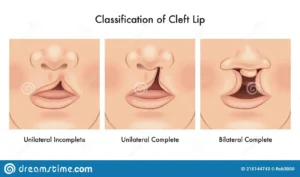
Cleft lips and Cleft palate is congenital anomalies that occur as a result of the failure of soft tissue or bony structure to fuse during the embryonic periods.
Cleft lips and palate may be complete and partially.
Cleft lips are also known as “hare lip“
Cleft Lips And Cleft Palate
Cleft Lips(hare lip)
Also known as CHEILOSCISIS
Cleft lips occur when the maxillary process is failed to fuse with the medial nasal process
It may be unilateral or bilateral
It occurs during 5-12 weeks of gestational age
Incidence is 1 in 800 live births
Cleft Palate
Also known as Palatoschisis
Cleft palate occurs when the lateral palatine process is failed to fuse
The severity of cleft palate is involve Uvula to the nasopalatine foramen
It occurs during 12-14 weeks of gestational age
Incidence 1 in 2000 live birth
Cleft Lips And Cleft Palate | hare lip
Etiology of cleft lip and palate
Maternal smoking and exposure to passive smoke
Drugs – Accutane, Phenytoin, Warfarin, ethanol etc.
Maternal folic acid deficiency
Hereditary and environmental factors
Exposure to radiation and rubella virus.
Chromosomal abnormalities
Teratogenic factors
Prolonged Maternal Anemia
Clinical features of cleft lip and palate
Failure to weight gain
Feeding problem
Poor Growth
Repeated ear infection and speech difficulty
Dental abnormalities
Middle ear fluid buildup and hearing loss
Psychological problem
Management Cleft Lips And Cleft Palate
Medical Cleft Lips And Cleft Palate hare lip
Firstly nurse assesses the physical Examination for cleft lips and gloved fingers use for cleft plate
Assess the ability to suck, swallow, and breathe
Slow and small quantity feeding is provided
Palade spoon, Medicine dropper, and syringe with catheter etc, use for feeding.
Intermittent burping during the feeding
Provide rest
Baby, semi upright position provide during feeding and side lateral position after feeding.
Bulb syringe or suction apparatus keep near to bed side.
2. Surgical Cleft Lips And Cleft Palate hare lip
Cheiloplasty – For Cleft lips
Palatoplasty- For Cleft plate
Cheiloplasty –
It is a plastic surgical procedure for repair the cleft lips
The procedure is done at 3-6 months
There is minimally invasive surgical procedure
Z shape suturing use in cheiloplasty to minimize the changes of separation of a suture.
Use 10 “rainbow” (C-shape) after the surgery to minimize the pressure on suture.
The prone position should be avoided in cheiloplasty-treated children. Only lateral and semi-upright positions provide
After feeding, the suture line is cleaned with NS sterile water, etc.
Palatoplasty –
Palatoplasty is a surgical procedure for the correct the palate with cleft palate person.
Palatoplasty procedure done at 6-18 months of age.
Palatoplasty procedure fill the gap of palate by MUCO PERIOSTEUM FLAP
Oral packing should be done after the surgery.
Prone position recommended for palatoplasty patient.
Complication
Recurrent Otitis media (Hearing loss) – due to dysfunction of Eustachian tube.
Feeding problem
Speech Problem
Recurrent Respiratory tract infection
Nursing Management
Nurse should carefully perform the head to toe assessment and assess the cleft lips and cleft palate deformity.
Nurses assess the client lips by visually and cleft palate by gloved figures.
Nurse assess the feeding pattern of the child
Assess the need for the surgical correction
Airway clear and provide proper position
Nurse encourage the parents to accept the child condition
Provide the complete immunization before the surgery
Elbow and jacket restrain provide after the surgery
Avoid the use of oral suctioning, Tounge depressor, oral temp., thermometer etc.
Don’t allow the child to brush and do not allow hard food to baby
Avoid the contact of the sharp object to the suture line.
KEY POINTS
The maxillary process is failed to fuse with the medial Nasal process is known – Cleft lips
Cleft palate Occur during the – 12-14 weeks of gestational age
Priority Nursing management in cleft lips and cleft palate – Clearance of airway
Which type of restrain use in the cleft plate and the cleft lips – Elbow and jacket Restrain
Which position is provided during the Feeding baby with Cleft lips and cleft Palate – Semi-upright Position
ECT is a physical therapy in which artificial or grand mal seizure is produced in patients by applying the electrode on the temporal region between the hemispheres of the brain.
ECT is the main and most common treatment for severe depression patients.
History of ECT
ECT was introduced by the cerletti and Bini in 1938.
American psychiatric association provides rights for ECT.
In 1976, consent started before ECT.
Consent for ECT should be collected by the patient.
In 2005, WHO also recommended consent before ECT.
In 2010, the Parliament of India passed the act to collect consent before ECT.
Indication of ECT
Major Severe depression of suicidal ideas.
Schizophrenia types – catatonic schizophrenia
Paranoid schizophrenia
Unresponsive schizophrenia.
Bipolar disorder.
Organic brain syndrome.
Delirium and profound mania.
Medical condition seizures.
Contraindication of ECT
Pregnancy, fracture patient.
Old age patient.
Myocardial infarction patient.
Retinal detachment.
Brain tumor.
Increased ICP (1st priority option).
Renal and lungs disorder.
Hypertension.
Note –ECT is contraindicated in pregnancy only in 1st trimester.
Amount of current in ECT
70 – 130 volt.
If seizures are not produced or patients take lithium therapy, it can be extended up to 150 volt.
Time duration of ECT = 0.6 – 1 second.
Extended up to 1.2 seconds.
Method and techniques of ECT
Direct method –
The direct method applies without sedation or anesthesia.
Only use the atropine sulfate.
Indirect method –
the indirect method also known as – modified ECT.
The indirect method is the commonest in clinical practice.
Anesthesia and sedation used during ECT with other associated drugs are –
Atropine sulfate
Thiopentane sodium
Succinylcholine
O2 inhalation.
Drugs during ECT
Atropine sulfate – Administer 30 minutes from ECT.
Atropine sulfate is used in ECT to prevent bradycardia.
Thiopentone sodium – Thiopentane sodium used to provide the anaesthesia during ECT.
Control the intensity of seizure.
Succinylcholine – Used as a muscle relaxant.
During ECT succinylcholine prevents the risk of fracture.
Learning trick for – sequence of drug administration during ECT
आज तुम सब को हवा में उड़ा दूँगा ।
आज = atropine sulfate
तुम = thiopentone sodium
सबको = succinylcholine
हवा = O2 administer.
Types of ECT
Unilateral ECT –
In unilateral ECT, electrodes are placed on a single side.
Eg. – Right side is for a right-handed person and the left side for a left-handed person.
Unilateral ECT is less effective and less confusing and less complicated.
Bilateral ECT –
Bilateral ECT is most commonly used in clinical practice.
Electrodes are placed on both sides of the temporal region.
Side of bilateral ECT – Bi frontal
Bi temporal region
Bilateral ECT is most effective but more confusing or more complicated.
Note – Position, where electrodes are placed unilateral.
ECT = D-Elias position.
Frequency of ECT –
In depression = Total ECT is 6 – 8 times.
In schizophrenia = Total ECT is 8 – 12 times.
In chronic schizophrenia = Total ECT 20 – 25 times.
Note – 3 times alternative days in a week.
(Only 3 ECT in a week)
Nursing role in preparation ECT
Nurses collect lab investigations and reports. Eg. – X-ray, ECG, and blood reports.
Select the consent of the patient.
Physical examination of the patient before the ECT.
The empty bowel and bladder of the patient are done.
Inform the family member of the procedure.
Remove all artificial dentures, metallic jewelry, and articles of lipstick and nail paints.
Loose cloth provided to patients.
Vital sign examination.
Shampoo to the hair, tie to the women’s hair.
A nurse administered pre- ECT medication.
Nursing role during ECT
Nurses provide the supine position and apply pillows under the lumbar curve to prevent the risk of fracture in the 3rd, 4th, and 5th lumbar vertebra.
Anaesthetic medication is to be administered.
Restrain both legs, to prevent the risk of femur fracture.
Provide mouth gag to prevent tongue bites.
Hyperextension of the head with support to the chin is to be done.
Vital sign examination and maintaining an airway.
Observe tonic and clonic phases during ECT.
Observe the intensity of seizures.
Nursing role after ECT
A nurse opened the restrain.
Place the patient in a lateral or side-lying position.
Assess the vital sign.
Nurses physically observe the patient for injury or any complications.
Give a sip of water to check the gag reflex.
Ambulation to the patient to observe the injury of fracture.
Complications of ECT
Retrograde amnesia – unable to recall past memory.
Most common complication.
Respiratory distress.
Aspiration.
Mandible/jaw fracture (most common fracture after ECT).
Psychotherapy is a relationship between the patient and the therapist. The therapist may be a psychiatrist, Nurse psychologist, etc.
Psychotherapy’s objective is personality growth in the direction of maturity, competence and self-actualization.
Psychotherapy is a treatment of mental illness by the psychological rather than medical treatment.
Purpose of psychotherapy
Psychotherapy helps in identifying the cause of abnormal behavior
Modified the patient’s abnormal behavior.
Reduce and stop abnormal thinking thoughts.
Improve the social functions.
Rehabilitation.
Helping the patient to resolve inner conflict and overcome feelings of handicap.
Psychotherapy promotes to development of self-esteem.
Psychotherapy helps to improve interpersonal relationships and communication skills.
Indication of Psychotherapy
Neurotic disorder – Eg Anxiety, Depression, OCD, etc.
Psychosis disorder
Alcohol and drug substance abuse.
Eating behavior disorder
Sexual behavior and personality disorder
Psychosomatic and behavioral disorder
Child psychiatric disorder
Contraindication of Psychotherapy
Unresponsive patient
Patient with excitement
Violence patient
Acute organic mental disorder (Delirium and dementia)
Manic patient
Unmotivated and unwilling patients.
Group psychotherapy is contraindicated in Hysteria, Hypochondriasis etc.
Psychotherapy is less effective in mental retardation.
Types of psychotherapy
Individual Psychotherapy
a). Psychoanalysis
b). Hypnosis
c). Abreaction
d). Supportive therapy
Ventilation
Persuasion
Re-education
Environment
Modification
Suggestion.
Group psychotherapy
Group psychotherapy is provided for 2 or more clients once a time.
Group psychotherapy is the treatment of psychological problems in which a group of patients and a group of psychiatrists discuss with each other and help in problem-solving.
the respiratory system is responsible for taking the proper amount of oxygen in the blood and removing the co2 from the blood.
The respiratory tract is divided into the upper and lower respiratory tract
Upper respiratory tract from the nose to the larynx
Lower respiratory tract from the trachea to the bronchioles
Respiratory tract is
Conducting caution of the respiratory tract is responsible for the transport of air including (the nose and nasal cavity, pharynx, larynx, and trachea).
The respiratory portion of the respiratory tract is responsible for carrying out the gas exchange.
Key Point
The upper respiratory tract consists of – Nose to the larynx
The lower respiratory tract consists of – Trachea to bronchioles
Nose Anatomy
Nose pizza man route of air entry and the first part of the respiratory tract.
Nose inspired the humidified, warm and filtered air
The external opening of the nose is called the nares or nostrils.
3 prominence (nasal concha) -superior, middle and inferior
3 space (meatus)- superior, middle and inferior
palette acts to separate the nasal cavity and oral cavity.
nose hair helps to protect entering the dust particle into the respiratory tract from the environment.
Bones surrounded the nasal cavities
Frontal bone
Sphenoid bone
Ethmoid bone
Maxillary bone
Nasal cartilage
Septal
Lateral
Minor alar
Major alar
Goblet cells responsible for secret mucus in the nose
the shape of the nose depends upon the nasal bone formation and formation of the bridge of the nose
Blood supply – The nose receives blood supply from ophthalmic, maxillary and facial arteries
Key Point
The external opening of the nose is called – Nostrils/nares
Which cell is responsible for secreting mucus in the nose – Goblet cell
Larynx Anatomy
Larynx also called the vocal cord or voice box
The larynx is responsible for the production of voice sound
a larynx is an air pass or organ, situated below the pharynx at the level of C3 to C6 vertebrae.
Larynx size in males – 44 mm and females- 36 mm
In puberty, the male larynx rapid growth the female larynx
The larynx is generally composed of various irregular shapes of cartilages
The larynx considers the 3 pairs and 3 unpaired cartilage.
3 paired cartilage are-
Corniculate
Arytenoid
Cuneiform
3 unpaired cartilage are –
Thyroid
Cricoid
Epiglottis
Thyroid cartilage
the thyroid cartilage is a ‘V’ shape in cross-section and the most prominent laryngeal cartilage
These cartilages is made of hyaline cartilage.
Thyroid cartilage’s upper part is made by the stratified squamous epithelium and the lower part is made by ciliated columnar epithelium tissue.
Cricoid cartilage
The cricoid cartilage is ring-shaped cartilage situated below the thyroid cartilage
These cartilages also made of hyaline cartilage
The cricoid cartilage is strong and thick cartilage than thyroid cartilage
The narrow anterior part of the record cartilage is called the arch, and the posterior broad is called the lamina.
Epiglottis cartilage
epiglottis cartilage is a leaf-shaped elastic flap structure, that is situated at the top of the larynx
epiglottis help to prevent the food passes in the tracheobronchial tree and cover the glottis during swallowing
It is a flexible and fibroelastic cartilage
Epiglottis cause temporary apnea during eating
Arytenoid cartilage
arytenoid cartilage is 2 small pyramid shaped cartilage, that are situated at top of the cricoid cartilage
This cartilage is form the posterior part of the larynx
There are two folds of mucous membrane on each side of the larynx
The upper fold is a vestibular fold
The lower fold is a vocal fold
Key Point
Which body part is responsible for the production of voice sound – The larynx
The larynx extends from – C3 to C6 vertebra
Leaf shape elastic flap cartilage of larynx – Epiglottis
Ring-shaped cartilage of larynx – Cricoid cartilage
The lower fold of the larynx is a – Vocal fold
Low pitch sound produced by the larynx in case – Vocal cord muscles are relaxed
Pharynx
The pharynx is a common pathway for air and food passes.
Pharynx located behind the oral and nasal cavity
Pharynx age 12 – 14 cm long tube, that is extended from base of the skull to 6th cervical vertebra.
The pharynx is divided into-
Nasopharynx (from the base of the skull to the soft palate)
Oropharynx (from the soft palate to C3 vertebra)
Laryngopharynx (from C3-C6 vertebrae)
Laryngopharynx is a caudal part of the pharynx and is also called the hypopharynx.
Muscles of pharynx
It is divided into 2 groups
Longitudinal muscles
Palatopharyngeus
Stylopharyngeus
Salpingopharyngeus
Pharyngeal constrictors
Superior
Inferior
Middle
Pharynx Blood supply – pharynx receives blood supply from the external carotid artery
The external carotid artery is –
Lingual artery
Facial artery
Maxillary artery
Pharynx Nerve supply – major 3 cranial nerves.
Maxillary nerve
Vagus nerve
Glossopharyngeal nerve
Key Point
Other names of laryngopharynx – Hypopharynx
Vocal Cord
vocal cords are covered with mucous membrane, that is located below the larynx and at the top of the trachea.
the vocal cord attached anteriorly with the thyroid cartilage posterior attach with arytenoid cartilage
When vocal cord muscles relax, the larynx causes a low pitched sound.
When vocal cord muscles contract, the larynx causes the High pitched sound.
larynx divided into three parts due to vestibular and vocal fold-
Vestibule of larynx- top part of vegetable fold.
Sinus or sinus of ventricle of the larynx – between vestibular and vocal fold.
Infraglottic part – below part of vocal fold.
Intrinsic muscle of the larynx
Cricothyroid muscle
Transverse arytenoid unpaired muscle
Thyroarytenoid and thyroepiglottic muscles
Posterior cricoarytenoid triangular muscle
Oblique arytenoid and aryepiglottic muscle
Lateral cricothyroid muscle
Vocal Cord Blood supply
The larynx receives blood supply from the superior and inferior laryngeal artery
Vocal Cord Venous drainage
venous drain by thyroid vein, that connect with internal jugular vein
Vocal Cord Nerve supply
parasympathetic supply by the superior and recurrent nerve that is the branch of the vagus nerve.
Trachea Anatomy
Also known as the windpipe
trachea occupied the lower part of the neck and in the superior mediastinum
the starting point of the trachea connects with the lower and of the larynx
The isthmus of the thyroid gland is covering the trachea
The trachea situated between the larynx and bronchus
Length of trachea – 12 cm (10-15)
Diameter of trachea – Male – 2cm Female – 1.5cm
lover and off tracker divided into the right and left principal bronchi, at the level of T5 (carina) vertebral level.
The right bronchus is slightly wider and more vertical than the left bronchus.
Left bronchus is longer and narrower than right bronchus.
Structure of trachea
The trachea is a cartilaginous structure of the middle respiratory tract.
The trachea is extracted from the C6 vertebra to the T5 vertebra.
16 to 20 regular incomplete C-shaped hyaline cartilage rings provide the support of the trachea.
These rings make the tubes convex anterolaterally.
rings are incomplete at the posterior surface, which prevents the collapse of the trachea.
Trachea layers
The outer layer (made of elastic tissue)
The middle layer (made by smooth muscles)
The inner layer (made of epithelium tissue)
Relation of trachea
Anteriorly
Brachiocephalic artery
Aortic arch
Lymph node
Manubrium sterni
Sternothyroid muscle
Posteriorly
Vertebral column
Oesophagus
Right side
Azygos vein
Right lungs and pleura
Right vagus
Left side
Left common carotid artery
Left subclavian artery and arch of aorta
Tracheobronchial tree
Introduction of Respiratory System
Blood supply of Trachea
The trachea receives blood supply from the inferior thyroid artery
Trachea Venous drainage
Drain into left brachiocephalic vein
Trachea Nerve supply
trachea receive nerve supply from sympathetic and parasympathetic laryngeal nerve
Teachea Lymphatic drainage
Into paratracheal and paratracheal nodes.
Key Point
Windpipe of respiratory tract – Trachea
Average length of the trachea is – 12 cm
Trachea is divided into right and left bronchus at the level of – T5 vertebra
The trachea extends from – C6 vertebra to T5 vertebra
Lungs Anatomy
Lungs are respiratory organs, occupying the thoracic cavity.
Lungs cover the major portion of the thoracic cavity.
lungs are spongy in texture and right and left are divided by the mediastinum.
lungs are extended from just above the clavicle to the diaphragm
Normal lung colour is the grey or brown but black colour of lungs due to deposition of carbon particles.
Weight of lungs
Right lung – 650 gm
Left lung – 600 gm
Thoracic cages (ribs) protect the lungs from injury.
The pleura is a serous membrane that covers the lungs.
The space between the parietal and visceral layer is called the pleural cavity.
Pleural cavity filled with serous fluid
Parts of lungs
Costal surface – it is the outer surface of the lungs, that is occupied against the costal cartilage. (large and convex shape service)
Medial surface – medial surface area of lungs is face is the mediastinum. medial surface divided into posterior vertebral part and anterior mediastinal part.
Border of lungs
Anterior border
Posterior border
Inferior border
Anterior border
It is a very thin and shorter border than the posterior border
These borders correspond to the pleural reflection
Posterior border
It is a thick border
Extend from C7 to T10
help to separate the vertebral part of the medial surface from the costal part.
Inferior border
The border helps to separate the base of medial and postal service.
Fissures in the lungs
Fissures are helpful to divide each lobe into lobs.
Right lungs consist two fissures-
Horizontal fissures
Oblique fissures
Right lungs consist 3 lobes –
Upper lobe
Middle lobe
Lower lobe
Left lung consists 1 fissure – oblique fissure
Left lung consists 2 lobe – upper and lower
Cardiac notch
cardiac notch is an indentation on the left lung surface that provides the space for the lungs.
It is occupied the anterior border of the left lung
Difference between right lung and left lung
Right lung
Left lung
The anterior border is straight
The anterior border is interrupted due to cardiac notch
Consist 3 lobes
Consist 2 lobes
Shorter and broader
Longer and narrow
Consist 2 fissures
Consist 1 fissure
Weight about 650 gm
About 600gm
Provide the space for liver
Provide the space for heart
Lingula absent
Lingula present
Each lung consists that 10 bronchopulmonary segment
Hilum (roots of lungs)
The hilum is a palace, where structures enter or leave the lungs.
Roots of lungs situated opposite side of, 6th and 7th thoracic vertebra.
Contents
Principal bronchus
2 pulmonary vein
1 pulmonary artery
Bronchial artery and vein
Areolar tissue
Bronchopulmonary lymph node
Blood supply of lungs
lungs receive the deoxygenated blood from the pulmonary artery and receive oxygenated blood from the pulmonary vein.
Nerve supply of lungs
Parasympathetic nerve supply from the vagus nerve
Sympathetic nerve supply from the 2nd and 5th sympathetic ganglia.
Key Point
Which structure covers a major portion of the thoracic cavity – The lungs.
The normal colour of the lungs – Gray, and brown colour.
The pleural cavity is filled with – Serous fluid.
Dome shaped part of the lungs is – Apex.
A cardiac notch is an indentation of – Left lungs.
Diaphragm Anatomy
The diaphragm is a chief regulatory muscle of respiration.
The form is responsible to separate the thoracic and abdominal cavities.
The diaphragm is a dome-shaped muscle.
75% inspiration done by diaphragm at resting period.
Diaphragm muscles fibres
Sternal
Costal
Lumbar
Sternal muscle fibres arise from the back of the xiphoid process.
Costal muscle fibres arise from the inner surface of the cartilage.
Lumbar muscle fibre arises from lateral and medial costal arches.
The right diaphragm is slightly higher.
During inspiration, the diaphragm descends into the abdominal cavity.
During expiration, diaphragms move upward in the thoracic cavity.
Online Application is invited for the Nursing Officer Recruitment Common Eligibility Test (NORCET) 2022 for the recruitment of Nursing Officer posts at Level 07 in the Pay Matrix pre-revised Pay Band-2 o Rs.9300-34800 with Grade Pay of Rs.4600/-, Group-B for AIIMS
New Delhi and other AIIMS as per available vacancies in the respective Institutes.Recruitment
Eligibility Criteria for appearing in NORCET
AIIMS NORCET Essential Qualification2022:-
1.B.Sc Nursing
B.Sc. (Hons.) Nursing / B.Sc. Nursing from an Indian Nursing Council/state Nursing council recognized Institute or University OR
B.Sc. (Post-Certificate) / Post-Basic B.Sc. Nursing from an Indian Nursing Council/State Nursing Council recognized Institute/ University.
Regist red as Nurses & Midwife with State / Indian Nursing Council
2. GNM
Diplo a in General Nursing Midwifery (GNM)from an Indian Nursing Council/State Nursing council recognized Institute / Board or Council
Regist red as Nurses & Midwife in State / Indian Nursing
Two Years Experience in a minimum 50 bedded Hospital after acquiring the educational qualification mentioned above as applicable for all Participating
Remarks – The required two years of experience as in above is an essential criterion and to be valid, the experience shall be acquired after obtaining Essential Qualification, i.e. after completing the residency period f the course, declaration of result & registration with State/Indian Nursing Council.
AIIMS Norcet Recruitment 2022 Pay Scale
Grade Pay of Rs.4600/-
Pay Band-2 of Rs.9300-34800
AIIMS NORCET Recruitment 2022 Age Limit:
For all AIIMS: Between 18-30 Years.
AIIMS NORCET Recruitment 2022 APPLICATIONFEES:
General/OBC Candidates – 3000/- (Rupees Three Thousand only)
The candidate can pay the prescribed application fee through DEBIT CARD/CREDIT CARD/ NET BANKING. Transaction / Processing fee, if any, as applicable, will be payable to the bank by the
Application fee once remitted shall not be refunded under any
Applications without the prescribed fee would not be considered and summarily
Application Fees of SC/ST candidates who appear in the Examination will be refunded after the declaration of results in due course of time.
AIIMS NORCET Recruitment 2022 Syllabus
The syllabus will be in accordance with education qualification and experience as mentioned in the Eligibility Section/Advertisement.
AIIMS NORCET Recruitment 2022 Exam Date:-
Online (CBT) mode Examination Date: 11th September 2022 (Sunday)
GENERAL CONDITIONS
The posts carry the usual allowance as admissible to Central Government Servant of similar status stationed at respective cities of respective Institutes/Hospitals.
The aspiring applicants satisfying the eligibility criteria in all respect can submit their application only through ON-LINE The Online applications can be done through the AIIMS website www.aiimsexams.ac.in from 04.08.2022 to 21.08.2022 up to 5:00 P.M. No documents including the Registration Slip of on-line application form are required to be sent in Physical form. However, all the applicants are advised to keep a copy of the registration slip with them, along with proof of payment for their record. Correction in registration will not be considered through any mode i.e. Email/letter. Hence candidates are advised to fill out their registration form carefully as no correction will be allowed after specified dates as per the procedure.
Correction/edit of Registration: For candidates requiring correction in Registration & Basic candidate information OR Completion of application form, the edit panel will be available from 08.2022 to 23.08.2022 only. It may kindly be noted that the editing shall be done only by the candidate. The candidate will be responsible for all corrections. No corrections are allowed after the closing date of editing i.e. 23.08.2022 by 05:00 pm. Applicants may note that further correspondence will NOT be entertained in this regard. Category from SC/ST to UR/OBC/EWS cannot be corrected once registration fees are submitted. Candidature will be canceled in case found incorrect information at any stage of recruitment.
The Online portal for application will be closed by 05:00 PM on 21.08.2022. The candidature of such applicants who fail to complete the online application by the stipulated date and time will not be considered and No correspondence in this regard will be entertained.
Those applying in response to this advertisement should satisfy themselves regarding their eligibility for the post applied They must be fulfilling all the eligibility criteria as of the closing date of online submission of applications, failing which their application will be summarily rejected. Required educational qualification/ experience should be completed on or before the last date of online submission of application. In the case of educational qualification, the candidate should have completed the residency period for the desired educational qualification including an internship on or before the last date of online submission of the application. Likewise, the candidate must have completed duration of desired experience on or before cut-off date i.e last date of submission of the online application. Recruitment Rules of respective AIIMS will be applicable for selection and based on merit as per NORCET Score.
The candidate must ensure that images of the photo, signature, and thumb impression should be as per the guidelines mentioned in the ‘Upload Image Instructions’ given in the General links and are clearly visible in preview at the time of filling of application in online mode. If the photo/signature/thumb impression image is not as per instructions given in the ‘Upload Image Instructions’ in that case, your application will be rejected. Due diligence and care should be taken while uploading images of photo, signature and thumb
7. AIIMS NORCET 2022 AGE RELAXATION:-
The cut-off date to determine eligibility in terms of age of candidates will be the last date of Online submission of applications e. 21.08.2022.
SC/ST/OBC/PWBD candidates who opt to apply for unreserved vacancies will not be eligible for age relaxation or relaxation in cut-off marks which are otherwise allowed to those belonging to these Further, reserve category candidates (SC/ST/OBC/PWBD) who become eligible by virtue of age relaxation applicable in their
Note: –
Any other Institute/Hospital not included in the above list may also be included before the declaration of
The NORCET score may be subsequently used by any of the AIIMSs for filling any of the vacancies for a period of one year at the discretion of competent
Important: As per the decision in the 4th meeting of CIB held on 27th July 2019, 80% of Seats are reserved for Females and 20% for Males.
Download Official notification of AIIMS NORCET 2022:-
Download Official notification of AIIMS NORCET 2022
Steel Authority of India Limited ( SAIL has released a new staff nurse vacancy notification. notification for paramedic trainees with 45 Vacancies. Candidates who are qualified in the 10th pass ANM, GNM Degree/Diploma. Sc. Nursing, DMLD GNM, and intermediate are eligible for this post please read the full notification and apply to the official website of SAIL this web site only mad for information. Other SAIL Recruitment 2022-related details are given below read and apply.
Intermediate/ Diploma in Dental Operating Room Assistant
SAIL Recruitment 2022 Age Limit
Minimum Age limit:- 21 years
Maximum Age Limit:- 45 Years
SAIL Recruitment 2022 Selection Process:-
Selection Based on Walk-in-interview
SAIL Recruitment 2022 Pay scale:-
Selected Candidates get Consolidate remuneration of a minimum of Rs.15020/- to a maximum of Rs.25000/- per month.
SAIL Recruitment 2022 How to apply:-
Visit the official SAIL website.
Read the official notification and verified the details related to the vacancy.
Download the official Application Form of SAIL Recruitment 2022.
Fill in the complete Details and Check. all details are correct after that.
Eligible Candidates may attend the interview process with the Application form and other required Documents. Document 1 Copy And Original Relevant Document required
Contact – It is the most common route of transmission of nosocomial pathogens.
Hands and clothes – The infection is spread through contact with the hand and clothes of hospital staff.
It is an adequate scope of microorganism transmission from one person to another person.
Hospital equipment – Some hospital equipment such as bronchoscopes, endoscopes, cystoscopes, etc. are infected, which is responsible for to spread of the infection.
Airborn
Droplet – Some infection particles are transmitted through inhalation routes.
Aerosols – The infection is transferred through nebulizers, humidifier and air conditioner etc.
Dust – Infection spread from bed making, floors, from wound during dressing etc.
Parenteral route – The infection is spread through contaminated fluid infusion, blood transfusion, provide contaminate blood products and tissue donation etc.
For example – hepatitis and HIV virus also transfer through parenteral route.
Oral route – Infection is spread through ingestion of contaminated food and water.
Types of Nosocomial infection
What are the 6 most common hospital-acquired infections?
Respiratory infection –
This type of nosocomial infection is spread through pulmonary ventilation and aspiration in unconscious patients.
Urinary tract infection –
These types of infections occur due to contaminated proceeding techniques of catheterization or unhygienic care of dressings.
The infection is prevented by the use of an aseptic technique during catheterization.
GI infections –
Infection occurs due to ingestion of contaminated food and fluid.
Surgical infection –
In the elder patient, post-operative infection is high. The infection occurs due to a lack of asepsis technique during surgery and during the dressing of wounds.
Burn –
In case of burn, staphylococcus aureus, streptococcus pyogenes, and pseudomonas aeruginosa are essential to cause hospital-acquired infection.
Bacteraemia –
Infection is spread through the infected intravenous cannula etc.
Prevention of Nosocomial infection
Proper hand washing is the most important vehicle to prevent the hospital from acquiring infection.
Use the alcohol hand rub.
Administer the antibiotics to the carrier staff or patient to destroy the pathogenic agents.
Isolated the infectious patient.
Use proper sterilization and disinfection techniques.
During the procedure, always use sterile equipment and dressing material.
All surgical and medical procedures are done under aseptic techniques.
Maintain proper personal hygiene.
Proper disposal of the hospital waste material.
Prevent overcrowding in the hospital and always use a face mask.
Maintain a well-ventilated hospital environment.
Staff use PPE kits during surgical procedures.
Standards to be maintained in the hospital.
Use proper investigation procedures.
Careful handling, cleaning and discarding the excreational waste.
The word research is derived from the French word “researcher “.
Research is divided into – Re and search.
” Re ” means – New, once again, or fresh.
” Search ” means – to look for something or examine it closely and carefully, to test and try or to prove.
Nursing research definition
Research is defined as the detailed and careful study of something to find out more information about it.
A/c to J.W. Best 1969 – Research may define a systematic and objective analysis and recording of controlled observation that may lead to the development of generalization, principles, and theories, resulting in prediction and possible ultimate control of events.
A/c to Ruth M. French 1968 – Research essentially is a problem-solving process a systematic, intensive study directed towards full scientific knowledge of subject studies.
Research is defined as a scientific and systematic process to answer the question in relation to the facts.
Definition of Nursing Research
A/c to ICN 1986 – Nursing research is a way to identify new knowledge and improve professional education and practice and use resources effectively.
A/c to S.K. Sharma 2005 – Nursing research is the scientific and systematic and orderly process to find out solutions for problems concerning nursing or generating and refining nursing knowledge, to improve quality of nursing Care, Nursing administration and nursing education.
A/c to polit and hungler 2001 – Nursing research is defined as a systematic search for knowledge about the issue of importance of nursing.
Purpose of Nursing Research
To provide a scientific basis for the nursing profession.
To provide evidence-based practice.
To refine and develop the nursing principles and theories.
To increase the professional knowledge in nursing.
To develop the scientific base of knowledge that is useful for providing quality nursing care, administration and education.
To help in the continuous growth of the nursing profession.
To provide advanced technology in the health sector.
To provide advanced practice to solve nursing problems.
To increase the accuracy of different nursing education and administrative techniques.
Help the nurse to identify the boundaries of her profession.
Nursing research helps to generate new ideas.
To make a precise formulation of the problem.
To prepare oneself to be a diligent researcher.
Develop new techniques, tools, or new knowledge.
Characteristics of good research
Begin with a clearly defined purpose –
Good research can always be conducted only in an effective manner and start with a clearly defined purpose.
Orderly and systematic process –
Orderly and systematic way conducted research is considered to be good, because it is the most important criteria for a scientific research process.
Finding a solution to a problem –
good research is essential for solving professional problems.
Based on the current professional issues –
always a good research based on the current’s issues and current problem that the public is facing.
To develop, refine and expand the professional knowledge –
good research essential to generate the new knowledge or expand the knowledge in the public.
Perform the activity slowly –
a good research does not do any activity quickly, it needs lots of time and patience.
Try to collect first-hand information data –
A good researcher collects all information and data directly from the subject by different methods.
Include appropriate methodology –
The choice of methodology in any research depends on many factors as each variable and research has unique characteristics.
Generate conclusions to repair and improve professional practices –
Good research cannot be conducted successfully unless it contributes to reinforcement and progress in the professional practice.
Adequately carried out activity –
A good research activity is incomplete and poor until the data collected is adequately and properly analyzed using a standardized and accepted method of data analysis.
Use of valid and reliable data collection tools –
Good research depends upon the validity and reliability of the research tool.
Good search is evidence-based practice.
Good research is interesting and motivating.
Good research is carefully recorded and reported.
Directed towards development or testing the theories.
Good research activity strives to communicate the findings as widely.
Types of Nursing Research
Types of research
Qualitative research
Qualitative research referred to the meanings, definitions, concepts, characteristics, symbols, metaphors and descriptions of things.
The qualitative research is used to understand the individual perceptions of events.
Qualitative research helpful to analysis of data such as words, pictures or objects.
Qualitative research is subjective data that provides a rich description of complex phenomena.
Qualitative research describes social phenomena as occurring naturally.
Phenomenology research –
The goal of the phenomenological method of research is to explain how any participant experiences a specific event.
Phenomenological method used interview, observation and surveys to obtain information from the subjects.
Describe the structure of experience, as they present themselves to consciousness, without beliefs from theory, deduction or other discipline.
2. Ethnography research –
Ethnography is the primary research that provides a framework for studying the pattern, meaning and experience of a defined culture group in a holistic fashion.
They reach and intact the culture group in a natural setting during the prolonged period.
Ethnography research involves the researcher embedding himself into the daily life and routine of the subject.
Grounded theory research –
grounded theory starts with questions or the collection of data.
Grounded theory research helps the nurses to understand and develop real-world knowledge about health.
It seeks theory that is comparable with the evidence.
Case study research –
A case study research methodology that is commonly used in social science.
A case study is based on an in-depth investigation of a group, event or single individual to find out the cause of the underlying theories.
Historical research –
The meaning of historical research studies of past events in an attempt to effects and causes of events, and their effects in current events.
Historical research in which critical inquiry of the past events and produce an accurate description and interpretation of those events.
2. Quantitative research
Quantitative research is a statistical research in which numerical data should be collected for assessment.
Quantitative research uses statistical, computational and mathematical tools to derive the results.
Quantitative research includes objective data that is concerned with tight control over the research situation and the ability to generalize findings.
True experimental research –
In experimental research a researcher actively introduces the intervention or treatment.
Experimental studies are explicitly designed to test causal relationships.
True experimental research emphasizes the interval validity.
Quasi-experimental research –
Quasi-experimental research essential to manipulate an independent variable without the random assignment of participants to condition.
The quasi experimental research schedule does not randomly assign participants to treatment or control groups for comparison.
Non experimental research –
Lack of the manipulation of an independent variable in non-experimental Research and random assignment of participants to conditions or orders of condition or both.
Descriptive research –
Descriptive research is responsible for describing the characteristics of the population phenomenon that is being studied.
Exploratory research –
Exploratory research is unstructured and informal research that is conducted to clarify and define the nature of a problem.
Cor- relational research –
Research is helpful to determine the relationship among 2 or more variables without any attempt to influence them.
Difference between quantitative and qualitative research
S.N
Qualitative research
Quantitative research
1.
Subjective data
Objective data
2.
Small sample size
Large sample size
3.
Flexible and emerging design
Structured and predetermined designed
4.
Whole is greater than part
Parts are equal to whole
5.
Inductive analysis
Deductive analysis
6.
Understandable research
Predictable research
7.
Data are not countable and measurable
Data are countable and measurable
8.
Multiple truth
One truth
9.
Result presented as narrated data++
Result presented as statistics data
10
Data collection by interview, observation etc.
Data collection by questionnaire, scales, tests, etc.
3. Basic research
Basic research is pure Research and fundamental research.
Basic research conduct without specific purpose.
It is the aim to improve scientific theories for improved understanding for prediction of natural or other phenomena.
Basic research generally carried out by universities.
Basic research is motivated by a scientist’s curiosity or interest in scientific questions.
4. Applied research
applied research based on functional purpose and practical uses.
The aim of applied research is to search for a solution for an immediate problem facing a society.
Applied research is methodology that is used to solve specific and practical issues that are affected by the individual or group.
Difference between basic and applied research
S.N
Basic research
Applied research
1.
Seek generalization
Study specific cases without the purpose of generalization
2.
Wider scope
More specific scope
3.
Report in technical language
Report in common language
4.
Explain ” why ” things happen
Explain ” How ” things can be changed
5.
Curiosity driven
Client driven
6.
Less connected with the economy
Highly connected with economic pursuits
Importance of nursing research
Nursing research is very important for the nurse to understand the various dimensions of the professions.
Research helps in the nursing profession to define the role of nurses.
Help to generate information regarding nursing careers.
Research is an essential tool for continuous development of nursing knowledge.
Nursing research helps to know about particular nursing situations.
Nursing research provides advanced technology in the health sector.
Nursing research helps in easing the services of Nursing.
Help to evaluate all nursing services.
To allow the nurses to make more informed decisions at each stage of the nursing process.
To provide the facility in the nursing practice and clarify the role of nurses in the healthcare delivery system.
To provide the effective and low-cost healthcare services.
Help in promotion of patient and nurse relationships.
To control the undesired outcomes.
Scope and areas of nursing research
Research in nursing practice.
Research in nursing education.
Research in nursing administration.
Health system and outcome care.
Research in nursing practice
Nursing research helps to evaluate the nursing experience and intervention for health promotion, prevention of illness and individual, family and community care in diverse settings.
To improve the quality of care.
To improve the quality of life.
To manage cardio-pulmonary critical illness.
To conduct the National health programmes.
To evaluate the success of community health Care.
Research in nursing education
To provide a skilled nursing education.
Research on teaching in the clinical setting.
To develop and evaluate the efficient educational techniques.
To identify the new method of education.
To develop learning skills of students through technology.
Research in Nursing Administration
To encounter the several problems and issues that require solutions.
To study nursing records.
Study of the hospital information system.
Manpower utilization study.
Research in health system and outcome care
To develop the cost-effective model of healthcare for rural and deprived communities.
Steps of the research process
Identification of research problem
↓
purpose of the study
↓
literature of review
↓
formulation of objective
↓
determine Research design
↓
Collection of data
↓
Analysis of data
↓
Analyse and evolution the information
↓
Execution of project
↓
analysis and interpretation
↓
Prepare and present the final Research report
↓
Communicate the research results.
Identification of research problems – The research problem is explained through a process from identifying a general area of interest for a particular subject.
Identify the importance of research problems in terms of contribution to the patient, society and nursing profession.
Purpose of the study – The purpose of this research is what researchers have to achieve with research.
Literature of review – Literature of review is helpful to develop the strong knowledge to carry out the research in the education and practice setting.
Literature of review provides a method of investigation already studied in relation to the proposed study.
It is also helpful to identify the variables that may influence research.
Formulation of objective – The object is the goal, you set to achieve in your studies.
Object informs a reader what you want to achieve through study.
Objectives are – main objectives
Subject objectives.
Determine Research design – Research design is a Blueprint that describes how to study and how to analyse it.
Generally, Research design based on the review of literature and theoretical framework.
Data collection – The researcher put the Research design into the action and collected data.
Data should be collected in an ideal way, it means reliable, accurate and unbiased data collection.
Data analysis
Before the data analysis, data should be collected in the quantitative research.
Statistical analysis fails to summarise, organise and reduce the data.
Descriptive analysis is useful to explain the specific characteristics of the data.
Analyse and evaluate the information
Collect all the information related to the topic and discard those not related to the topic.
Analysis and interpretations – Analysis and interpretations are helpful to summaries the collected data and provide the answer to the questions that triggered while research.
Prepare and present the final Research report
Prepare research completely and communicate research results through conferences, seminars, journals, reports, and verbally.
It is a substance that inhibits water excretion without affecting the sodium excretion.
The drugs are useful to reduce the urine output.
The drugs mostly used in the diabetes insipidus.
Antidiuretic hormone (ADH) is secret from the posterior pituitary gland.
ADH hormone water reabsorption from distal and collecting tubules, and reduced urine output.
ADH is stimulated due to increased plasma osmolarity contraction of extracellular fluid volume.
ADH consists of the V1 and V2 receptors.
Antidiuretics drugs Classification –
Antidiuretic hormone – Desmopressin and vasopressin.
Thiazide diuretics – Amiloride.
Indomethacin, carbamazepine, chlorpropamide.
what is vasopressin hormone?
Vasopressin acts on a V1 receptor of ADH that leads to blood vessel contraction and increases arterial pressure.
Vasopressin also acts on V2 receptors and leads to fluid reabsorption in the renal tubules and increases the water permeability, that result is decreased urine formation.
Vasopressin uses
Diabetic insipidus (DI)
Bleeding oesophageal varices
Hypotension and shock
Abdominal distension
Before abdominal radiography.
Vasopressin adverse effects
Water intoxication
Hyponatremia
Increase specific gravity of urine.
Desmopressin –
It is a synthetic analog of vasopressin, which is work on the V2 receptor.
Desmopressin acts on the CD cells.
Desmopressin is a man-made form of vasopressin.
Desmopressin causes the antidiuretic effect that increases water reabsorption, and decreases water excretion.
Uses of Desmopressin –
Nocturnal enuresis
To prevent dehydration
Diabetes insipidus
Hemophilia – A
Von Willebrand disease.
desmopressin dose –
10 – 40 mg / day in adults.
5 – 10 mcg / H. S. in children.
desmopressin Adverse effects –
Congestion, nasal irritation, epistaxis, hyponatremia etc.
Thiazide (HCTZ) – Use to increase the tubular reabsorption in the.
It is useful in both neurogenic and nephrogenic DI.
Amiloride – It is a drug of choice (DOC) of lithium-induced nephrogenic DI.
Indomethacin – Use as an antidiuretic, and treat the nephrogenic DI and nephrotic syndrome.
Carbamazepine – It is used in the neurogenic DI.
desmopressin Key points
Which drug is useful to decrease the urine output – Antidiuretic
Normal urine output – 1.5 liter / day
Normal GFR in a healthy person – 180 liter/day
Antidiuretic hormone secret from the – Posterior pituitary gland
Hypertension is the most common health disorder in the middle age group.
Hypertension is the most important risk factor for cardiovascular mortality and morbidity.
Hypertension means ‘ elevated blood pressure of more than 140/90 mm of Hg in the body.
Normal blood pressure – 120/80 mm of Hg.
Antihypertensive drugs are used to treat hypertension.
Hypertension classification
Prehypertension
= systolic BP = 120 – 139 mmHg.
= Diastolic BP= 80 – 89 mmHg.
Stage 1 hypertension
= Systolic = 140 – 159 mmHg.
= Diastolic = 90 – 99 mmHg.
Stage 2 hypertension
= Systolic = above 160 mmHg.
= Diastolic = above 100 mmHg.
Emergency hypertension
= Systolic = above 180 mmHg.
= Diastolic = above 120 mmHg.
Isolated systolic hypertension
= systolic = 140 and above
= Diastolic = below 90 mmHg.
Primary hypertension-
It is idiopathic hypertension and the most common hypertension.
Secondary hypertension –
Occur due to disease condition.
Antihypertensive drugs Classification:-
Classification of antihypertensive drugs
Blood pressure is controlled by the anatomic nervous system renin-angiotensin – Aldosterone system.
The hypertensive drugs act on the heart, kidney, and blood vessels by influencing these systems.
Hypertensive drugs are
Beta-blockers.
Alpha-blockers.
Alpha and beta blockers
Calcium channel blockers
Central sympatholytic
Vasodilators
Diuretics
ACE inhibitors
Angiotensin receptor blockers (ARB – inhibitors).
Beta blockers –
It is a beta-adrenergic blocking agent that causes vasoconstriction in the blood vessels.
Beta-blocker drugs prevent the stimulation of beta-adrenergic receptors of the sympathetic nervous system and decrease cardiac output and lead to low blood pressure.
Drugs – Atenolol, timolol, metoprolol, propranolol, betaxolol, etc.
Dose – 25 – 100 mg.
Uses of Beta Blocker
To treat mild hypertension.
Arrhythmia.
Angina pectoris.
Chest pain and heart attack.
Glaucoma.
Myocardial infarction.
Contradiction of Beta Blocker
Asthma, COPD
Bradycardia and cardiogenic shock
Peripheral vascular disease
Prinzmetal angina, heart block.
Adverse effects of Beta Blocker
Orthostatic hypotension,
fatigue, nausea and vomiting,
bradycardia etc.
Alpha-blockers
It is an adrenoceptor antagonist which prevents the stimulation of the adrenergic receptors and leads to decreased blood pressure.
Alpha bocker Drugs
Doxazosin
Prazosin
Terazosin
Alpha blocker drugs cause the blood vessels dilation there by lowering blood pressure.
Uses of alpha blocker
Hypertension
Benign prostatic hyperplasia
Congestive heart failure
Pheochromocytoma.
Contraindication of alpha blocker
Hypersensitivity, hypotension
Pregnancy, lactation.
Alpha beta blockers
The combined drugs are used to treat high blood pressure.
The drug causes vasodilation and decreases cardiac output.
Drug – Labetalol 50 mg BD.
Calcium channel blockers –
It is a calcium channel antagonist that interferes in the movement of calcium through calcium channels.
The drug is used to treat hypertension.
Calcium channel blocker Mechanism of action-
Calcium channel blocker drugs
↓
Block the entry of calcium ions into calcium channels
↓
Reduce intracellular calcium ions
↓
Relax vascular smooth muscles
↓
Vasodilation
↓
Decrease blood pressure.
Calcium channel blocker Drugs
Amlodipine – 5 -10 mg OD
Nifedipine – 5 – 20 mg orally OD
Verapamil – 40 – 160 mg
Diltiazem – 30 – 60 mg.
Amlodipine and nifedipine drugs decrease the main arterial pressure and increase the heart rate.
Diltiazem and verapamil drugs depress the SA node and decrease the heart rate.
Calcium channel blocker drug uses
Hypertension
Angina
Arrhythmia
Calcium channel blocker Adverse effects
Ankle edema, nausea, constipation.
Hypotension, drowsiness, headache.
Palpitation
Vasodilators drugs-
Vasodilators drugs Mechanism of action
Vasodilators drugs
↓
Relax the vascular smooth muscles
↓
Vasodilation
↓
Decrease blood pressure.
Vasodilators drug name-
Hydralazine – 25 – 50 mg TDS.
Minoxidil.
These drugs are directly worked on the vessel walls.
Adverse effect – Rapid heartbeat, nausea or vomiting, edema, headache, hirsutism etc.
Central sympatholytic drugs
Central sympatholytics drugs
↓
Stimulate the A2 adrenergic receptor in the brain stem center
↓
Decrease the sympathetic nerve activity and outflow
↓
Decrease blood pressure.
Drugs–
Clonidine (Catapres) – 100 ug OD.
Methyldopa (Aldomet) – 250 – 500 mg TDS.
Methyldopa is a drug of choice of hypertension during pregnancy.
Diuretics drugs –
The drugs are responsible for increasing urine output.
Drugs are
High efficacy drug = furosemide – 20 – 80 mg.
Medium efficacy drug = hydrochlorothiazide drug
= Thiazide-like drugs.
Low efficacy drug = spironolactone – 25 – 50 mg.
diuretics drug Mechanism of action –
Diuretics drugs
↓
Increase the urine output
↓
Decrease the extracellular fluid and plasma volume
↓
Decrease cardiac output
↓
Decrease blood pressure.
Uses Diuretics drugs
Hypertension
Edema and congestive heart failure.
Acute pulmonary edema.
Renal disease and liver cirrhosis.
Glaucoma.
Contraindication of Diuretics drugs
Gout disorder
Diabetes patient
Pregnant mother
Dehydrated patient.
Side effects of Diuretics drugs
hypokalaemia
hyperglycemia
vertigo etc.
ACE inhibitors –
It is an angiotensin-converting enzyme inhibitor, which is used to treat high blood pressure and heart failure.
ACE inhibitor Mechanism of action
ACE inhibitor drugs
↓
Angiotensin – 1st is not converting into angiotensin – 2nd
↓
Decreased production of angiotensin – 2nd
↓
Decrease the sodium and water retention
↓
Cause the vasodilation
↵
Decrease blood volume
Decrease blood pressure
Decrease sympathetic activity
Decrease ventricular preload and afterload
Inhibit vascular and cardiac hypertrophy.
ACE inhibitor Drugs
Captopril – 25 – 150 mg
Lisinopril – 5 – 40 mg
Enalapril – 2.5 – 40 mg
Ramipril- 1.25 – 10 mg.
Uses of ACE inhibitor-
Hypertension
Congestive heart failure (CHF)
Myocardial infarction (MI)
Diabetic nephropathy
Treat high cardiovascular risk patients.
Contraindication of ACE inhibitor-
Pregnancy
Renal artery stenosis
Azotaemia
Hypotension
Hyperkalaemia patient
Severe stenosis of aortic and mitral valve
History of allergy.
ACE inhibitor Adverse effects
Hypotension, urticaria, cough
Rashes, angioedema, hyperkalemia
Proteinuria, taste change, leukopenia etc.
ARB inhibitors –
Angiotensin receptor blocker drug.
It has a similar effect as ACE inhibitors.
The drug blocks the effect of angiotensin 2nd.
The ARB inhibitor drug is prescribed if the patient cannot tolerate the ACE inhibitor drugs.
ARB inhibitors Mechanism of action-
ARB inhibitors drugs
↓
To inhibit the action of angiotensin 2
↓
Decrease sodium and water retention
↓
Vasodilation
↓
Decrease blood pressure.
ARB inhibitors Drugs
Atacand (Candesartan) – 8mg.
Cozaar (losartan) – 25 – 50 mg.
Micardis (Telmisartan) – 20 – 80 mg.
Diovan (Valsartan) – 80 – 160 mg.
Benicar (olmesartan) – 20 – 40 mg.
ARB inhibitors Use-
Hypertension, congestive heart failure (CHF)
Myocardial infarction (MI)
Diabetic nephropathy.
ARB inhibitors Adverse effects
Hyperkalaemia, hypotension, fainting
Dizziness, fatigue, vomiting, diarrhoea
Angioedema, back pain, etc.
Key points
what is The most common hypertension is a – Primary hypertension
Secondary hypertension occurs due to – Disease conditions
Which system controls the blood pressure? – Autonomic nervous system
Alpha and beta blockers combined drug is – Labetalol
Drug of choice for pregnancy-induced hypertension – Methyldopa
ACE inhibitor drug full form? – Angiotensin-converting enzymes
ACE inhibitor drugs cause the – Decreased production of angiotensin 2nd
Which hypertensive drugs are contraindicated in pregnancy? – ACE inhibitors
ARB inhibitor drug full form – Angiotensin receptor blocker drug
Hello Dear Nursing Student. If you are preparing for a competitive nursing exam preparation. Like NORCET, DSSSB, RRB, JIPMER, CHO, and any other State nursing preparation. Missionnursing helps you to provide the best nursing coaching institute in the nursing field The DMMS Medical And Nursing Academy.
DMMS Medical And Nursing Academy
DMMS is one of the best nursing coaching institutes in Jaipur. DMMS Coaching provides full support during and after the coaching period. DMMS provides the best teaching experiences and knowledge classes. DMMS has no official notes provided. During and after the coaching time. all notes Students self-prepared notes. So all Notes are demo notes and some self-hand-writing notes are available below.
DMMS Director:- Shri Naval Kishor Sharma
Facilities are available in DMMS:-
Expert Faculty for every single subject
Exclusive Study material
Weakly test series ( Top ranked Student Giving Prize and Motivated all students also)
Systematic teaching method with anatomical graphs, charts, pictures, and video, all class on the projector.
All Classrooms are fully air-conditioned (AC) And fire Safety equipment is also installed in every classroom.
Mock Test and Pree Competitive Exams and After exams Discussion session.
All pdf materials are available on the internet. we also collect the pdf in different ways. all pdf provide free of cost. This PDF collection helps poor medical students.
DMMS Nursing Coaching Notes Specialty
All DMMS Notes are easy to read.
DMMS Nursing Academy Notes are multilanguage like Hindi and Engish.
no Notes Extra Charges.
Disclaimer –
We are not the Owner Of This PDF, and nor has It Been Created Nor Scanned. We only provide the material that is already available on the Internet. If Any Violates The Law or there is a Problem so please get in touch with Us- Contact Us
Mission Nursing provides all nursing notes free of cost to help all nursing and medical field Students. So Please Help in distribution for all nursing students
Peptic ulcer, a lesion or sore develops on the lining of the GI tract, including – the oesophagus, stomach or small intestine.
Peptic ulcers occur due to an imbalance between the secretion of acid, pepsin, bile and gastric mucosal defence.
An ulcer found in the stomach is called a gastric ulcer and an ulcer found in the duodenum is called a duodenal ulcer.
Gastric ulcer cause pain after meals and duodenal ulcer pain relieve after meals.
Peptic ulcer drugs
To reduce gastric acid secretion
H2 – blockers drugs – H2 – blockers drugs taken empty stomach at night to treat peptic ulcer.
To block the action of the H2 receptor and prevent the action of histamine on parietal cell
↓
To reduce the gastric secretion
↓
Also reduce the pepsin activity
↓
Peptic ulcer healing is faster.
Peptic ulcer Drugs are
Ranitidine – 150 – 300 mg tablet (Rantac).
Cimetidine – 200 mg.
Famotidine – 20 – 40 mg.
Roxatidine – 75 – 150 mg.
Uses
Duodenal and gastric ulcer
Gastroesophageal reflux disorder
Stress ulcer.
Proton pump inhibitors –
The drugs are more potent inhibitors of acid secretion in the stomach. It is a more effective and more usable drug that is taken one hour before the meal.
Proton pump inhibitors Mechanism of action
Proton pump inhibitors drug
↓
Block the H+, K+ ATPase pump
↓
Inhibit the gastric acid secretion.
Drugs
Omeprazole – 20 – 40 mg capsule / injection.
Pantoprazole – 40 mg.
Esomeprazole – 20 – 40 mg.
Lansoprazole – 15 – 20 mg.
Rabeprazole
Dexlansoprazole.
Uses
Gastric ulcer and duodenal ulcer.
Gastroesophageal reflux disorder (GERD)
Stress ulcer
Zollinger – Elinson syndrome (Z – E syndrome).
Prostaglandin analogue
Misoprostol – 200 ug.
Anticholinergic drugs – It is a selective M1 receptor blocker.
The drug block the gastric M1 receptors and inhibits the gastric secretion.
Drugs
Pirenzepin – 100 – 150 mg.
Propantheline – 15 – 30 mg.
Telsnzepine.
2. To neutralize the gastric acids
Antacids – Antacids is a chemical substance which is react with gastric acid and inhibit the gastric contents activities.
It is an insoluble substance, that useful to relieve pain and treat peptic ulcer.
Mechanism of action – It neutralizes the gastric acid and inhibit the gastric acid secretion.
Drugs
Systemic drug – Sodium bicarbonate drug.
1 – 5 gm orally.
Non-systemic drug
Aluminium hydroxide – up to 1 gm.
Magnesium hydroxide – 0.5 – 1 gm.
Calcium carbonate – up to 1.5 gm orally.
Magnesium carbonate – 250 – 500 gm orally.
Uses
Gastric and duodenal ulcer.
Indigestion, gastritis, heartburn.
Peptic ulcer pain and burning.
Adverse effects
Constipation, hypermagnesemia, diarrhoea
Hyperphosphatemia, alkalosis.
3. Anti H – pylori Drugs – Helicobacter pylori is a Gram negative bacteria, and most common cause of peptic ulcer.
The drug take empty stomach.
Drugs
Amoxicillin
Clarithromycin
Bismuth subsalicylate
Metronidazole
Tetracycline
Key Points
A lesion or sore develops in the lining of GI tract – Peptic ulcer
Which peptic ulcer causes pain after meals – Gastric ulcer
Which drug is useful to neutralize the gastric acid – Antacids