These Are Some National Health Program List in India these lists help Community Health Office. other nursing Exams The national health program is one of the most Important Questions In Comparative Exams in Nursing Exams. this Health Programs List help to pass all nursing and Staff Nurse Exams, NORCET Notes, available on our site:-
National Health Program List:-
1.- National Family Planning Programs:- 1951
2.-National Malaria Control Programs (NMCP):- 1953
3.- National Leprosy Control Program:- 1955
4.- National Malaria Eradication Program (NMEP): – 1958
5.-National Tuberculosis Program (NTP):- 1962
6.- Integrated Child Development Services (ICDS) Scheme:- 1975
7.- National Program for Control of Blindness (NPCB):- 1976
8.-Kala Azar Control Program: – 1977
9.-Modified Plan of Operation (MPO):- 1977
10.- National Mental Health Program:- 1982
11.- National Leprosy Eradication Program (NLEP): – 1983
famous scientists and their discoveries are very important in all nursing and medical Exams Specially Neet Exams. list of biology scientists and their discoveries for neet? This Type of Question ask many times in staff nurse exams and Community Health Officer (CHO) NORCET AIIMS Exams, Staff Nurse Exams, Nursing Officer Exams, PGI, RRB, and NEET Exams Special for these students make these posts. Indian Scientist list Given below in Post Reed and tack screenshots for the screen and not down all scientist name and their Discovery. Another type of questions scientists and their discoveries related to microorganisms.This List is For B.Sc Nursing /GNM/and Other Competitive Exams Student Help.
S.N
Discovery
Name of Scientist
1.
Founder of Nursing
Florence Nightingale
2.
Father of Microbiology
Louis Pasteur
3.
Father of Modern Bacteriology
Robert Koch
4.
Vaccination Coined By
Edward Jenner
5.
PCR ( Polymerase Chain Reaction )
Kary Mullis
6.
First Polio Vaccine Discovered by
Jonas Salk
7.
Penicillin Discovered by
Alexander Flemming
8.
Catgut Discovered by
John Hunter
9.
Blood Group Discovered by
Karl Landsteiner
10.
Plasmodium Life Span coined by
Ronald Ross
11.
Antiseptic Principle of Practice Surgery
Joseph Lister
12.
Father of Medicine
Hippocrates
13.
Father of Indian Surgery
Sushruta
14.
Father of Epidemiology
John Snow
15.
Father of Indian Medicine
Charak
16.
Father of Genetics
Gregor Mendel
17.
TB, Cholera & Anthrax Discovered by
Robert Koch
18.
Father of Modern Psychology
Wilhelm Wundt
19.
Father of Physiology
Claude Bernard
20.
Father of Modern Pathology
Rudolf Virchow
21.
Father of Modern Psychiatry
Emil Kraepelin
22.
Demonstration of Schizophrenia
23.
Schizophrenia Word Coined by
Eugene Bluelar
24.
Psychoanalytic Theory Given by
Sigmund Freud
25.
The psychosocial theory is given by
Erik Erikson
26.
Classical Condition theory of Learning
Evan Pavlow
27.
Operant Theory of Learning
Skinner
28.
Intelligence Score / Intelligence Quotient
Afraid Bennet
29.
Father of Sociology
Auguste Comte
30.
ECG Discovered by
William Einthoven
31.
ECT Discovered by
Ugo Cerletti & Binni
32.
Stethoscope Discovered by
Rene Laennec
33.
BP Instrument Discovered by
Samuel Siegfried Karl Rilter
34.
Glass / Mercury Thermometer
Daniel Gabriel Fahrenheit
35.
X-Ray
Wilhelm Conrad Roentgen
Indian scientists and their discoveries:-
Satyendra Nath Bose:- Bose-Einstein statistics and the theory of the Bose-Einstein condensate
Meghnad Saha:- the Saha ionization equation.
Prafulla Chandra Ray:- Invent a new compound theory, Mercurous Nitrite
Salim Ali:- systematic bird survey in India and abroad
Homi J Bhabha:– BARC and the head of India’s nuclear program major role in Indian science and technology
Jagadish Chandra Bose:- Crescograph to measure growth in plants
Ramanujan:- Infinite series for pi, analysis, number theory, and continued fractions Play a major role in Indian Science and technology fields.
A Disaster is any Human-made or Natural event that Causes destruction and devastation that cannot be alleviated without assistance. In the Disaster, Activate The Emergency response plan Immediately.
what is Triage System:-
A System of Sorting and Identifying the Severity of injuries. Or Triage is a process of prioritizing patients based on the severity of their condition so as to treat as many as possible when resources are insufficient for all to be treated immediately.
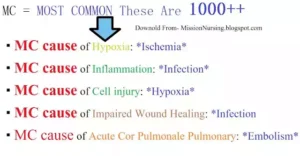
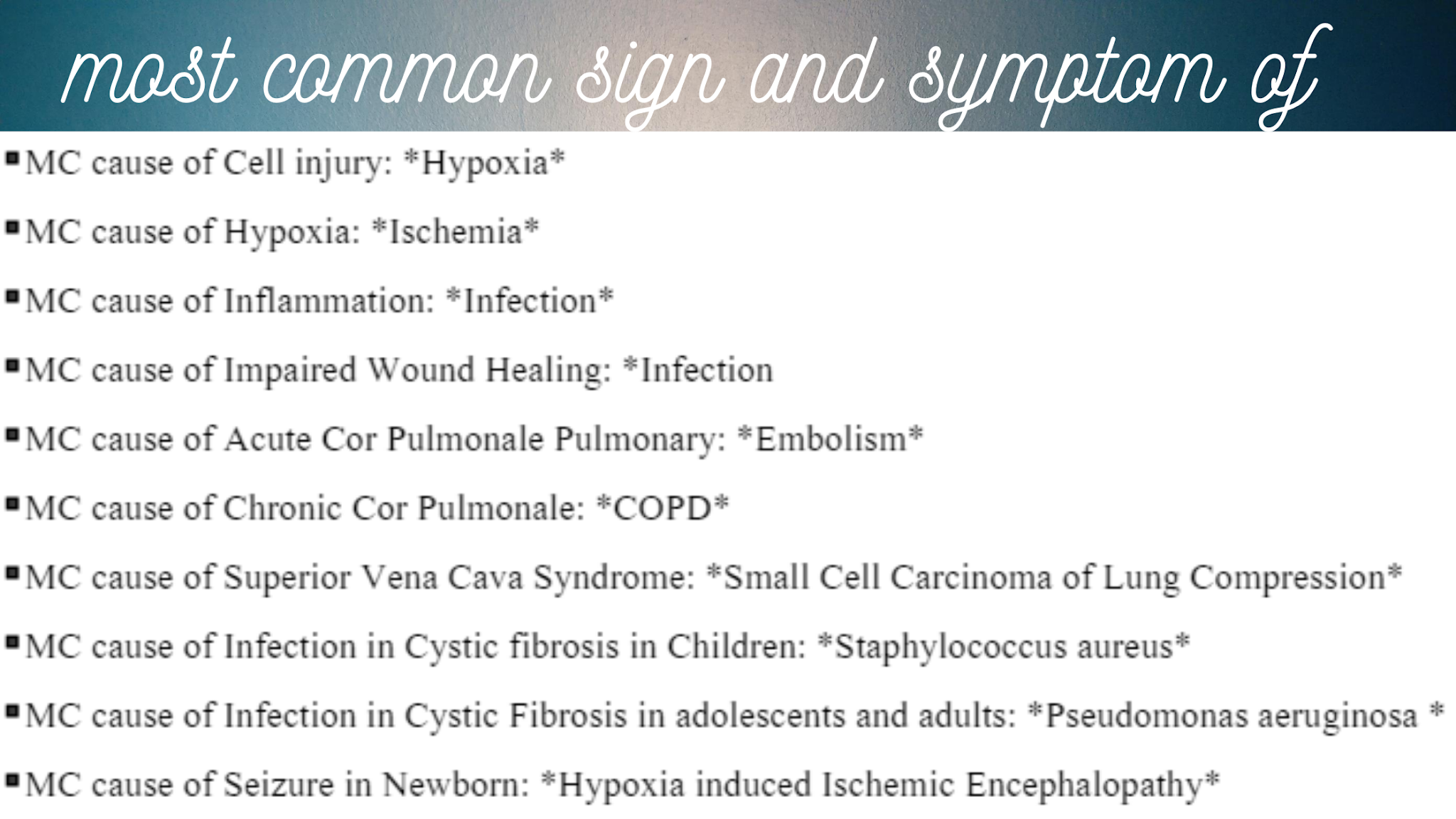
Most Common cause of Impaired Wound Healing: *Infection
Most Common cause of Acute Cor Pulmonale Pulmonary: *Embolism*
Most Common cause of Chronic Cor Pulmonale: *COPD*
Most Common cause of Superior Vena Cava Syndrome: *Small Cell Carcinoma of Lung Compression*
Most Common cause of Infection in Cystic fibrosis in Children: *Staphylococcus aureus*
Most Common cause of Infection in Cystic Fibrosis in adolescents and adults: *Pseudomonas aeruginosa
Most Common cause of Seizure in Newborn: *Hypoxia-induced Ischemic Encephalopathy*
Most Common cause of Epiglottitis in Children: *Hemophilus influenza b*
Most Common Lesion of Diabetic Retinopathy: *Diffuse Glomerulosclerosis*
Most Common Lesion in Asbestosis: *Benign Pleural Plaques*
Most Common Benign Lesion of Liver: *Cavernous Hemangioma*
Most Common Intracranial Lesion after Head Injury: *Subdural Hemorrhage*
Most Common cranial Nerve involved in Glomus tumor: *Facial Nerve*
Most Common Nerve palsy in Diabetic Retinopathy: *Oculomotor*
Most Common Nerve for Peripheral stimulation (Supramaximal Stimulation): *Ulnar Nerve (Volar side of Wrist)*
Most Common Nerve involved in Leprosy: *1st Posterior Tibial Nerve 2nd Ulnar Nerve*
Most Common Nerve leading to Abscess: *Ulnar Nerve*
Most Common Nerve injured in anterior dislocation of the shoulder: *Circumflex branch of axillary nerve*
Most Common Nerve injured in Fracture neck of Numerus: *Axillary nerve*
Most Common Nerve injured in Lunate Dislocation: *Median Nerve*
Most Common Nerve injured in Fracture medial epicondyle of Numerus: *Ulnar nerve*
Most Common Nerve injured in Supracondylar fracture of Numerus: *1st Anterior Interosseous Nerve 2nd Median Nerve 3rd Radial Nerve*
Most Common Nerve injured in Forearm fractures especially Monteggia fracture: *Posterior interosseous Nerve*
Most Common Nerve involved in Perilunate dislocation: *Median Nerve*
Most Common Nerve injured in Posterior Dislocation of Hip: *Sciatic nerve*
Most Common Nerve injured in Most CommonBurney’s Incision: *Iliohypogastric Nerve*
Most Common Nerve involved in Thoracic outlet Syndrome: *Ulnar Nerve*
Most Common Nerve affected by Plexiform Neurofibroma: *Trigeminal Nerve*
Most Common Nerve injury in Postpartum Female: *Common Peroneal Nerve*
Most common route of Lead Intoxication: *Inhalation*
Most CommonOccupational Cancer: *Skin(Squamous cell carcinoma)*
Most CommonMental Disorder causing death: *Alzheimer’s and Other Dementia*
Most Common Infection of Streptococcus pneumonia: *Otitis Media*
Most Common Gram Positive organism causing meningitis: *Streptococcus pneumonia*
Most CommonGram Negative organism causing meningitis: *Neisseria meningitides*
Most Common Source of Meningococcal meningitides: *Carrier*
Most Common Legionella causing Human disease: *Legionella Pneumophilia*
Most Common Diagnostic test in Lymphogranulorum venerum: *Cell Culture*
Most Common Infection Complicating Organ Transplantation: *CMV*
Most Common Genital Lesion in HIV patient: *Herpes*
Most Common organ affected in Amoebic Colitis: *Caecum*
Most Common organ affected in Visceral Leishmaniasis: *Spleen*
Most Common Diagnostic specimen for Visceral Leishmaniasis: *Spleen*
Most Common Parasitic Infection of CNS: *Cysticercosis*
Most Common Congenital Lesion complicated by Infective Endocarditis: *VSD*
Most Common association of Right-sided aortic arch: *Tetrology of Fallot*
Most Common condition associated with Coarctation of Aorta: *Bicuspid Aortic Valve*
Most Common Rheumatic Valvular Disease: *Mitral Regurgitation*
Most Common Renal Vein Thrombosis is seen in *Membranous Glomerulonephritis*
Most Common Ectopic Ureter associated with: *Dysuria*
Most Common Symptomatic CNS infection in *Neonates Rubella, HSV*
Most Common Virus causing Diarrhoea in Infants: *Rota Virus*
Most Common Biochemical abnormality in Congenital Hypertrophic Pyloric Stenosis: *Hypokalemic Hypochloremic Metabolic alkalosis with Paradoxical aciduria*
Most Common Carcinoma of Breast: *Intraductal Carcinoma*
Most Common cells damaged during Hypoxia: *Neurons*
Most CommonThyroid carcinoma: *Papillary*
Most Common Thyroid carcinoma after radiation Papillary
Most Common etiological agent for Lung Abscess: *Anaerobic bacteria*
Most Common Chronic Occupational disease in the world: *Silicosis*
Most Common Renal Stones: *Calcium Oxalate*
Most Common CNS Herniation: *Transtentorial Herniation*
Most Common Demyelinating Disease: *Multiple Sclerosis*
Most Common mutated gene in Human cancer: *P53*
Most Common mutation in Hereditary Spherocytosis: *Ankyrin*
Most Common mutation in Hereditary Elliptocytosis: *Spectrin*
Most Common Congenitally absent muscle in Humans: *Pectoralis Major*
Most Common weakened muscle in Osteoarthritis: *Quadriceps*
Most Common fractured bone in carpus: *Scaphoid*
Most Common Injured organ in Blunt injury abdomen: *Spleen*
Most Common Hereditary blood coagulation disorder: *Factor V Leiden*
Most Common virus associated with Transfusion Hepatitis: *HCV*
Most Common Source of Hemorrhage in Duodenal Ulcer (Arterial): *Gastroduodenal Artery*
Most Common Lobe involved in Carcinoma Prostate: *Posterior Lobe*
Most Common Zone involved in Carcinoma Prostate: *Peripheral Zone*
Most Common Node involved in Ca Prostate Metastasis: *Obturator Node*
Most Common Congenital Deformity of Urethra: *Hypospadiasis*
Most Common Cancer in Burn Scar: *Squamous Cell Carcinoma*
Most Common Origin of Melanoma: *Junctional Melanocytes*
Most Common Clinical Pattern of Basal cell carcinoma: *Nodular*
Most Common Infection in Dry Wound in Burns: *Pseudomonas*
Most Common side of Unilateral Cleft Lip: *Left*
Most Common Salivary Gland to get Stones: *Submandibular Gland*
Most Common Type of Inflammation: *Catarrhal
Most Common Type of Hemoglobinopathy in World: *Thalassemia*
Most Common type of mutation causing β-Thalassemia: *Splicing mutation*
Most Common type of AML: *M2*
Most Common type of AML in Down’s Syndrome: *M7*
Most Common Type of Ca Penis: *Squamous Cell Carcinoma*
Most Common Type of Malignant Melanoma: *Superficial Spreading Type*
Most Common cause of Acute Adrenocortical Insufficiency: *Abrupt withdrawal of Corticosteroids*
Most Common cause of SIADH: *Ectopic ADH by Small Cell Cancer*
Most Common cause of Hyperaldosteronism: *Conn’s Syndrome (Adrenocortical Adenoma-Left sided MOST COMMON)*
Most Common cause of Thyrotoxicosis: *Grave’s Disease*
Most Common cause of Hypothyroidism in Iodine Sufficient areas of the world: *Autoimmune Hypothyroidism (Hashimoto’s Thyroiditis)*
Most Common cause of Primary Hyperparathyroidism: *Parathyroid Adenoma*
Most Common cause of Secondary Hyperparathyroidism: *Renal Failure*
Most Common cause of Hypoparathyroidism: *Surgical Removal of Parathyroid Gland*
Most Common cause of Panhypopituitarism: *Pituitary adenoma*
Most Common cause of Cushing’s Syndrome: *Administration of Exogenous Corticosteroids*
Most Common cause of Congenital Adrenal Hyperplasia: *21α Hydroxylase Deficiency*
Most Common cause of Right Heart Failure: *Left Heart Failure*
Most Common cause of Ascending Aorta Aneurysm: *Hypertension*
Most Common cause of Secondary Raynaud Phenomenon: *Systemic Sclerosis
Most Common cause of Acute bacterial Endocarditis: *Staphylococcus aureus*
Most Common cause of Subacute Endocarditis: *α Hemolytic Streptococci(Viridans)*
Most Common cause of Prosthetic Valve Endocarditis: *Staphylococcus epidermidis (Coagulase-negative*
Most Common cause of endocarditis in IV drug users: *Staphylococcus aureus*
Most Common cause of Bleeding during Tonsillectomy: *Paratonsillar Vein*
Most Common cause of Left Recurrent Laryngeal Nerve Palsy: *Ca Bronchus*
Most Common cause of Right Recurrent Laryngeal Nerve Palsy: *Thyroid Surgery*
Most Common bacterial cause of Pustule: *Streptococcus pyogenes*
Most Common cause of Cellulitis: *Streptococcus pyogenes*
Most Common cause of Lobar Pneumonia: *Streptococcus pneumonia*
Most Common cause of Bronchopneumonia: *Staphylococcus aureus*
Most Common cause of Otitis Media: *Streptococcus pneumonia*
Most Common cause of Septicemia in A splenic patient: *Streptococcus pneumonia*
Most Common cause of gas gangrene: *Clostridium perfringens(A-type)*
Most Common cause of actinomycosis: *Actinomyces Israeli*
Most Common cause of mycetoma: *Fungi*
Most Commoncause of UTI: *E.coli*
Most Common cause of Catheter-associated UTI: *E.coli*
Most Common cause of Intraabdominal Abscess: *E.coli*
Most Common cause of Acute Bacterial Peritonitis: *1st E.coli 2nd Klebsiella*
Most Common cause of Salmonella gastroenteritis: *Salmonella typhimurum*
Most Common bacterial cause of Traveller’s Diarrhoea: *ETEC*
Most Common viral cause of Traveller’s Diarrhoea: *Rotavirus*
Most Common parasitic cause of Traveller’s Diarrhoea: *Giardia*
Most Common cause of Pyrexia of Unknown Origin: *Mycobacterium tuberculosis*
Most Common cause of Bloodstained nipple discharge: *Intraductal Papilloma*
Most Common cause of Adenomatoid cancer: *Follicular Carcinoma*
Most Common cause of Thyroiditis: *Hashimoto’s Thyroiditis*
Most Common cause of Esophagitis: *Esophageal Reflux*
Most Common cause of Esophageal Perforation: *Instrumentation*
Thank you
Pradeep Kumar
If you have any correction In this Post Material Please Comment…..
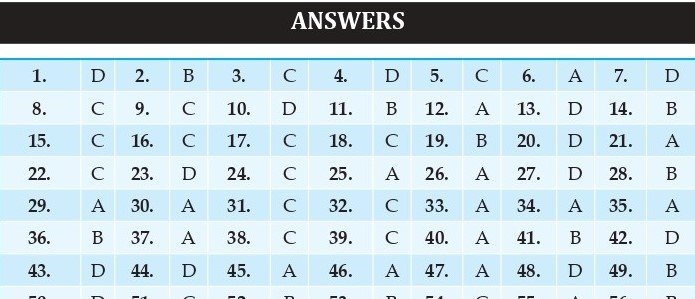
1. is invagination or telescoping of a portion of the intestine into an adjacent, more distal section of the intestine, which creates a mechanical obstruction: A. Hirchsprung’s disease B. Aneurism C. Enterocolitis D. Intussusception
2. _______is one of the primary causes of Diabetes insipidus: A. Lack of insulin B. Changes in the posterior lobe of the pituitary gland C. Pancretic disorder D. Over secretion of insulin
3. _____ is the temperature for tepid sponging: A. 15-18° C B. 18-25° C C. 27-37° C D. 40-45° C
4. Which is the safest method of sterilizing milk? A. Boiling B. Simmering C. Freezing D. Pasteurizing
5. Sleeping sickness is caused by: A. Mosquito B. House fly C. Tsetse fly D. Sand fly
6. ________ is a congenital narrowing of the opening of the foreskin so that it cannot be retraced: A. Phimosis B. Stenosis C. Stricture D. Fistula
7. Pastule in the area of eyelash follicle is called ______: A. Ptosis B. Conjunctivitis C. Glaucoma D. Style
8. Side to side curvature of spine is called______: A. Dysplasia B. Khyposis C. Scoliosis D. Epiphysis
9. Cerebral Malaria is caused by_____: A. Plasmodium ovale B. Plasmodium vivax C. Plasmodium falciparum D. Plasmodium malarial
10. When is the post maturity of pregnancy considered? A. After 40 weeks B. After 43 weeks C. After 41 weeks D. After 42 weeks
11. ________ is formed from vitamin K, a fat-soluble vitamin absorbed from small intestine: A. Thromboplastin B. Prothrombin C. Fibrinogen D. Thrombin
12. Scalds means it is a burn caused by: A. Moist heat B. Flame C. Chemicals D. Electricity
13. Normal fetal heart sound is _____ per minute: A. 90-100 B. 100-120 C. 110-130 D. 120-140
14. Due to the lack or low level of ________enzyme does a young child suffer from cretinism: A. Calcitonin B. Tetraiodothyronine C. Hydrocortisone D. Aldosterone
15. In India it is recently found that incidence of malaria is increasing due to_______: A. Poor sanitation conditions B. Increase in population C. Mosquitoes becoming DDT resistant D. Poverty in villages
16. Normal BI-Pareital (BPD) Mrasurement of full term fetal head is______: A. 10.5 cms B. 11.4 cms C. 9.5 cms D. 8.5 cms
17. Negri bodies are found in cells infected with________: A. Fowlpox virus B. Vaccinia virus C. Rabies virus D. Paramyxo viruses
18. Which one of these is not an obstetric forceps? A. Haig fergusson forceps B. Kiellands forceps C. Briggs forceps D. Wrigleys forceps
19. Whooping cough is caused by________: A. Streptococcus Bacillus B. Pertussis Bacillus C. Vericella virus D. Non-specific viral infection
20. Difficulty in achieving and maintaining balance, gross or fine motor incardinationis called_______: A. Dysthanasia B. Diplegia C. Spasticity D. Ataxia
21. _________ is considered mood disorder, which include the occurrence of depressive episodes and one or mor elated mood episodes: A. Bipolar disorder B. Delusional disorder C. Psychotic disorder D. Depressive disorder
22. Name of the duodenal hormone is________: A. Gastrin B. Acid pepsin C. Cholecystokinin D. Gastric inhibiting peptide 23. Lumbar punchture (spinal tap) is done in between_____ vertebrae: A. L2 and L3 B. L3 and L4 C. L1 and L2 D. L4 and L5
24. The normal uterus weighs ____gms: A. 90 B. 80 C. 60 D. 50
25. “Moslem prayer” position is used in _____surgery: A. Laminectomy B. Laproscopy C. Laryngectomy D. Laprotomy
26. The term meningocele means______: A. The meningis protrude out through the spinal canal B. Spinal cord ans the cord memberanes protrude out C. Only spinal cord protrudes D. CSF collected in a cyst
27. An opening in the bone through which blood vessels, nerves, and ligaments pass is called _______: A. Fossae B. Sulcus C. Antrum D. Foramen
28. __________ is celebrated as World Health day: A. June 5th B. April 7th C. March 8th D. May 31st
29. Omphalitis is the infection of ________ in new born children: A. Umbilical cord B. Eyes C. Pharynx D. Ears
30. Mumps is a disease that affects: A. Parotid gland B. Tongue C. Salivary gland D. Thyroid
31. Empyema means ________: A. Collection of fluid in peritoneal cavity B. Colletion of fluid in pleural cavity C. Collectio of pus in pleural cavity D. New growth in the lungs
32. The primary activityof selective antibiotic penicillin is ________: A. Inhibit protein synthesis B. Inhibit nucleic acid synthesis C. Inhibit cell wall synthesis D. Metabolic antagonism
33. The audible range of human ear is between: A. 20-20,000 Hz B. 50-500 Hz C. 200-20,00 Hz D. 20-2000 Hz
34. Pernicious anemia is the commnest from of anemia caused by lack of ______: A. Vitamin B12 B. Folic acid C. Iron D. Calcium
35. ________ is a common agent responsible for infantile diarrhea.: A. Rotavirus B. Streptococci C. E.coli D. Entamoeba histolytica
36. Immunity is not long lasting in ______ disease: A. Diphtheria B. Influenza C. Whooping cough D. Mumps
37. Schizophrenia comes under ______ form of psychological disorders: A. Psychotic disorder B. Dysthymic disorder C. Cyclothymic disorder D. Depressive disorder
38. _________is the term used for slower heart in an adult, usually less than 60BPM.: A. Tachycardia B. Arrhythmia C. Bradycardia D. Mesocardia
39. Major source of air pollution is _____: A. Burning of wood B. Boigas C. Fossil fuels D. Cow dung cakes
40. Bedsores are caused by localized _____: A. Ischemia B. Contusion C. Excess heat D. Friction
41. ________may be caused due to the accumulation of lead in the body: A. Thalassemia B. Weakening of nerves C. Weakening of bones D. Paralysis
42. A space called the ____ is found between the two pleural cavities: A. Serosa B. Parietal C. Soleus D. Mediastinum
43. Viruses require____for growth: A. Bacteria B. Animals C. Plants D. Living cells
44. _______is an another term used for the umbilical cord: A. Onphalon B. Amnion C. Chorion D. Funis
45. The term still birth is used after ______weeks of pregnancy: A. 28 B. 36 C. 20 D. 30
46. ________ is not a cause for tear: A. Gyanaecoid pelvis B. Face presentation C. Rigid perinum D. Large baby
ESIC Previous Question paper With Answer Key 2020-21 Update all quection
Note:- Other Question Upload As Soon as possible ………
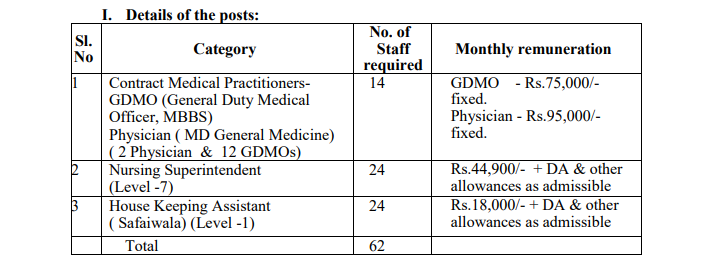
ENGAGEMENT OF PARA MEDICAL STAFF ON CONTRACT BASIS
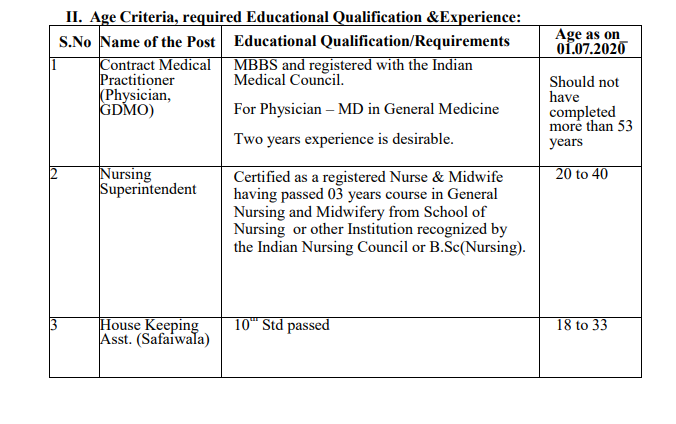
In view of the exigencies related with the COVID-19 Pandemic, Railway Hospital, Integral Coach Factory, Chennai requires the following Medical Personnel and ParaMedical Personnel on contract basis for their Designated Duty in COVID 19 Ward for a period of 3 months or till the scheme continues. Candidates in possession of eligibility criteria mentioned at Para 2, can apply for the respective posts. Preference will be given to those who are residents in Greater Chennai, followed by residents of Kanchipuram & Tiruvallur District, and then of those residing in Tamil Nadu, than those residing in the Southern States and finally those from other states:
Note :
1. Relaxation of 5 years of age for SC/ST candidates.
2. Relaxation of 3 years of age for OBC Non-Creamy layer candidates.
Above mentioned age relaxation is applicable only for Nursing Superintendent (Level 7) and for Housekeeping Assistants (Level-1)
III.Mode of Application:
Candidates may apply ONLINE at the following address:
https//icf.indianrailways.gov.in
Only Online Applications will be accepted. No Paper application will be accepted. Hardcopy/ Printout and certificates/documents need not be sent.
Last Date for Submission of Online Application:-17.05.2020 at 17.30 Hrs.
IV.Medical Examination:
Selected candidates shall undergo a medical examination, for fitness to perform the work awarded to him/her before the contract.
IV.Medical Examination: Selected candidates shall undergo a medical examination, for fitness to perform the work awarded to him/her before the contract.
V. Selection Process
Interview on online like Mobile/Telephone will be conducted for the selection of suitable candidates for CMP Doctors & Nursing Superintendent. First preference will be given to those who are residents in Greater Chennai, followed by residents of Kanchipuram & Tiruvallur District, and after that those residing in Tamil Nadu (those closer to Chennai will be given preference) will be considered. Only if there is a shortfall, then applications from those residing in the Southern States, followed by those from other states will be considered. Subject to the condition laid down with regard to residence, for Doctors & Nursing Superintendent, higher qualification than prescribed qualification, academic performance, experience etc. will get preference.
For Level 1, the listing will be on the basis of 10th marks, subject to the above condition of residence. No Certificates are required at the time of application. Shortlisted candidates are required to send Scanned Copies of the Certificates to the email/WhatsApp number only at the time of the interview. Email ID/ Whatsapp number will be communicated later.
COVID-19 अलग-अलग लोगों को अलग-अलग तरीके से प्रभावित करता है। अधिकांश संक्रमित लोग हल्के से मध्यम बीमारी का विकास करेंगे और अस्पताल में भर्ती हुए बिना ठीक हो जाएंगे। सबसे आम लक्षण:
बुखार
सूखी खांसी
थकान
कम सामान्य लक्षण:
दर्द एवं पीड़ा
गले में खराश
दस्त
आँख आना
सरदर्द
स्वाद या गंध का नुकसान
त्वचा पर एक दाने, या उंगलियों या पैर की उंगलियों के मलिनकिरण
गंभीर लक्षण:
सांस लेने में कठिनाई या सांस की तकलीफ
सीने में दर्द या दबाव
भाषण या आंदोलन का नुकसान
यदि आपके पास गंभीर लक्षण हैं, तो तत्काल चिकित्सा की तलाश करें। हमेशा अपने डॉक्टर या स्वास्थ्य सुविधा पर जाने से पहले फोन करें।
हल्के लक्षण वाले लोग जो अन्यथा स्वस्थ हैं उन्हें घर पर अपने लक्षणों का प्रबंधन करना चाहिए। औसतन यह तब होता है जब लक्षणों को दिखाने के लिए वायरस से संक्रमित होने में 5-6 दिन लगते हैं, हालांकि इसमें 14 दिन तक लग सकते हैं।
COVID-19 के प्रसार को रोकने के लिए:
अपने हाथों को अक्सर साफ करें। साबुन और पानी का उपयोग करें, या शराब आधारित हाथ रगड़ें।
खांसी या छींकने वाले किसी से भी सुरक्षित दूरी बनाए रखें।
अपनी आंखों, नाक या मुंह को न छुएं।
खांसने या छींकने पर अपनी नाक और मुंह को अपनी मुड़ी हुई कोहनी या एक ऊतक से ढक लें।
यदि आप अस्वस्थ महसूस करते हैं तो घर पर रहें।
यदि आपको बुखार, खांसी और सांस लेने में कठिनाई होती है, तो चिकित्सा पर ध्यान दें। पहले से बुलाओ।
अपने स्थानीय स्वास्थ्य प्राधिकरण के निर्देशों का पालन करें।
चिकित्सा सुविधाओं के लिए अनावश्यक यात्राओं से बचने से स्वास्थ्य देखभाल प्रणाली अधिक प्रभावी ढंग से संचालित हो सकती है, इसलिए आपकी और अन्य लोगों की सुरक्षा होती है।
खुद की देखभाल यदि आप बीमार महसूस करते हैं तो आपको आराम करना चाहिए, बहुत सारे तरल पदार्थ पीना चाहिए, और पौष्टिक भोजन खाना चाहिए। परिवार के अन्य सदस्यों से अलग कमरे में रहें, और यदि संभव हो तो एक समर्पित बाथरूम का उपयोग करें। साफ और कीटाणु अक्सर छुआ सतहों।
हर किसी को घर पर एक स्वस्थ जीवन शैली रखनी चाहिए। एक स्वस्थ आहार बनाए रखें, सोएं, सक्रिय रहें और फोन या इंटरनेट के माध्यम से प्रियजनों के साथ सामाजिक संपर्क बनाएं। बच्चों को मुश्किल समय के दौरान वयस्कों से अतिरिक्त प्यार और ध्यान देने की आवश्यकता होती है। जितना हो सके नियमित दिनचर्या और शेड्यूल का ध्यान रखें।
किसी संकट के समय दुखी, तनावग्रस्त या भ्रमित होना सामान्य है। उन लोगों से बात करना जिन पर आप भरोसा करते हैं, जैसे दोस्त और परिवार, मदद कर सकते हैं। यदि आप अभिभूत महसूस करते हैं, तो एक स्वास्थ्य कार्यकर्ता या परामर्शदाता से बात करें।
Mission Nursing वेबसाइट और अपने राष्ट्रीय और स्थानीय सार्वजनिक स्वास्थ्य प्राधिकरण के माध्यम से उपलब्ध COVID-19 प्रकोप की नवीनतम जानकारी से अवगत रहें। दुनिया भर के अधिकांश देशों में COVID-19 के मामले देखे गए हैं और कई का प्रकोप देखा जा रहा है। चीन और कुछ अन्य देशों के अधिकारियों ने अपने प्रकोप को धीमा करने में सफलता पाई है। हालांकि, स्थिति अप्रत्याशित है इसलिए नियमित रूप से नवीनतम समाचारों के लिए जांच करें।
आप कुछ साधारण सावधानियां बरतकर COVID -19 के संक्रमित होने या फैलने की संभावनाओं को कम कर सकते हैं:
अपने हाथों को अल्कोहल-आधारित हाथ से नियमित रूप से और अच्छी तरह से साफ करें या उन्हें साबुन और पानी से धोएं। क्यों? अपने हाथों को साबुन और पानी से धोना या अल्कोहल-आधारित हाथ रगड़ना उन वायरस को मारता है जो आपके हाथों पर हो सकते हैं।
अपने और दूसरों के बीच कम से कम 1 मीटर (3 फीट) की दूरी बनाए रखें। क्यों? जब कोई व्यक्ति खांसता है, छींकता है, या बोलता है, तो वे अपनी नाक या मुंह से छोटी तरल बूंदों को छिड़कते हैं जिनमें वायरस हो सकता है। यदि आप बहुत करीब हैं, तो व्यक्ति को बीमारी होने पर आप COVID-19 वायरस सहित बूंदों में सांस ले सकते हैं।
भीड़-भाड़ वाली जगहों पर जाने से बचें। क्यों? जहां लोग भीड़ में एक साथ आते हैं, आपको COIVD-19 से किसी के निकट संपर्क में आने की संभावना है और 1 मीटर (3 फीट) की भौतिक दूरी बनाए रखना अधिक कठिन है।
आंखों, नाक और मुंह को छूने से बचें। क्यों? हाथ कई सतहों को छूते हैं और वायरस उठा सकते हैं। एक बार दूषित होने पर, हाथ वायरस को आपकी आंखों, नाक या मुंह में स्थानांतरित कर सकते हैं। वहां से, वायरस आपके शरीर में प्रवेश कर सकता है और आपको संक्रमित कर सकता है।
सुनिश्चित करें कि आप, और आपके आस-पास के लोग, अच्छी श्वसन स्वच्छता का पालन करें। इसका मतलब है खांसी या छींक आने पर अपनी मुड़ी हुई कोहनी या टिशू से अपने मुंह और नाक को ढंकना। फिर उपयोग किए गए ऊतक को तुरंत निपटाने और अपने हाथों को धो लें। क्यों? बूंदों से वायरस फैलता है। अच्छी श्वसन स्वच्छता का पालन करके, आप अपने आसपास के लोगों को सर्दी, फ्लू और सीओवीआईडी -19 जैसे वायरस से बचाते हैं।
जब तक आप ठीक नहीं हो जाते हैं, तब तक खांसी, सिरदर्द, हल्का बुखार जैसे मामूली लक्षणों के साथ भी घर पर रहें। क्या कोई आपके लिए आपूर्ति लाता है। यदि आपको अपना घर छोड़ने की आवश्यकता है, तो दूसरों को संक्रमित करने से बचने के लिए मास्क पहनें। क्यों? दूसरों के साथ संपर्क से बचने से संभव COVID -19 और अन्य वायरस से उनकी रक्षा होगी
यदि आपको बुखार, खांसी और सांस लेने में कठिनाई है, तो चिकित्सा पर ध्यान दें, लेकिन यदि संभव हो तो अग्रिम में टेलीफोन पर कॉल करें और अपने स्थानीय स्वास्थ्य प्राधिकरण के निर्देशों का पालन करें। क्यों? आपके क्षेत्र की स्थिति की जानकारी के लिए राष्ट्रीय और स्थानीय अधिकारियों के पास सबसे अधिक तारीख होगी।
अग्रिम में कॉल करने से आपका स्वास्थ्य देखभाल प्रदाता आपको जल्दी से सही स्वास्थ्य सुविधा के लिए निर्देशित कर सकेगा। यह आपकी रक्षा भी करेगा और वायरस और अन्य संक्रमणों को फैलने से रोकने में मदद करेगा।
डब्ल्यूएचओ या आपके स्थानीय और राष्ट्रीय स्वास्थ्य अधिकारियों जैसे विश्वसनीय स्रोतों से नवीनतम जानकारी पर अद्यतित रहें। क्यों? स्थानीय और राष्ट्रीय अधिकारियों को यह सलाह देने के लिए सबसे अच्छा स्थान दिया जाता है कि आपके क्षेत्र के लोगों को खुद की सुरक्षा के लिए क्या करना चाहिए।
अल्कोहल-आधारित हैंड सैनिटाइज़र के सुरक्षित उपयोग पर सलाह
COVID -19 के खिलाफ खुद को और दूसरों को बचाने के लिए, अपने हाथों को बार-बार साफ करें। अल्कोहल-आधारित हैंड सैनिटाइज़र का उपयोग करें या अपने हाथों को साबुन और पानी से धोएं। यदि आप अल्कोहल-आधारित हैंड सैनिटाइज़र का उपयोग करते हैं, तो सुनिश्चित करें कि आप इसका उपयोग करते हैं और इसे ध्यान से संग्रहीत करते हैं।
अल्कोहल-आधारित हैंड सैनिटाइज़र बच्चों की पहुँच से बाहर रखें। उन्हें सिखाएं कि सैनिटाइज़र कैसे लगाया जाए और इसके उपयोग की निगरानी करें।
अपने हाथों पर एक सिक्के के आकार की राशि लागू करें। उत्पाद की एक बड़ी मात्रा का उपयोग करने की आवश्यकता नहीं है।
अल्कोहल-आधारित हैंड सैनिटाइज़र का उपयोग करने के तुरंत बाद अपनी आँखों, मुँह और नाक को छूने से बचें, क्योंकि यह जलन पैदा कर सकता है।
COVID-19 से बचाव के लिए अनुशंसित हैंड सैनिटाइज़र अल्कोहल-आधारित हैं और इसलिए ज्वलनशील हो सकते हैं। आग या खाना पकाने से पहले उपयोग न करें।
किसी भी परिस्थिति में, बच्चों को शराब-आधारित हैंड सैनिटाइज़र न पिलाएं या न दें। यह जहरीला हो सकता है।
याद रखें कि साबुन और पानी से हाथ धोना COVID-19 के खिलाफ भी प्रभावी है।
FOR NEW UPDATES FOLLOW & COME BACK TO MY BLOGS
STAY HOME
RELATED LINKS ABOUT COVD-19 FOLLOW THE FOLLOWING LINKS
????how do People Deal With The Coronavirus in India????
INTRODUCTION Signs and symptoms that are usually noted by the patient, impel her to form a meeting with a physician for confirmation of pregnancy.
What is pregnancy:-
DEFINITION OF PREGNANCY it’s the state of carrying a developing embryo or fetus within the feminine body from conception to birth. After the egg is fertilized by sperm and then implanted within the lining of the uterus, it develops into the placenta and embryo or fetus.
Duration of Pregnancy:-
Usually, 40 weeks or 2. 280 days or 10 lunar months or 3. 9 months and seven days, calculated from the primary day of the last menstrual period. Beginning from the primary day of the last menstrual period, it’s divided into three trimesters, each lasting three months. trimester ( First 12 weeks) trimester ( 13-28 weeks) trimester ( 29-40 weeks)
Early signs of pregnancy :-
PRESUMPTIVE SIGNS OR SUBJECTIVE SYMPTOMS AMENORRHOEA FREQUENCY OF MICTURITION BREAST DISCOMFORT FATIGUE FAINTING
Miscarriage symptoms:-
AMENORRHOEA
• Absence of menstruation in women of reproductive age.
• Since nine months during pregnancy periods don’t occur.
• If any sort of bleeding has occurred during 9 months shouldn’t be confused with the commonly met pathological bleeding. E.g. – imminent abortion
.
Nausea
• it’s present in about 50% of cases, mostly during the first pregnancy.
• Nausea and vomiting begin about 6 weeks after the last menstrual period and typically disappear by about 14 weeks.
• it’s thanks to the high level of pregnancy hormones.
9. FREQUENCY OF MICTURITION
• Resting of bulky uterus on the fundus of the bladder due to the anteverted position of the uterus.
• it’s present during 8-12 weeks of pregnancy and subsides after 12 weeks.
BREAST DISCOMFORT
• it’s present during the 6th week within the sort of feeling of :
* Tenderness.
* Tingling.
* Fullness.
* Increase in size.
* Pigmentation of areola.
* Pricking sensation.
FATIGUE
• it’s frequent in early pregnancy and subside around 12-14 weeks of pregnancy with bringing renew energy
3 days pregnant symptoms:-
PROBABLE SIGNS OR OBJECTIVE SIGNS
• Breast changes
• Cardio-vascular changes
• Respiratory changes
• Integumentary changes
• Musculoskeletal changes
• Abdomen and uterine changes
• Pelvic changes
what are the symptoms of pregnancy:-
BREAST CHANGES
• These are valuable only in primiparae, compared to multiparae.
•Breast changes are evident between 6-8 weeks.
•There is enlargement with vascular engorgement with delicate veins visible under the skin thanks to the increased blood supply, making the veins more noticeable.
•Nipples and areola (primary) become more pigmented or darker.
•Montgomery’s tubercles are prominent.
•The thick yellowish secretion (colostrum) is often expressed as early as 12th week.
1. A 43-year-old African yank male is admitted with erythrocyte anemia. The nurse plans to assess circulation within the lower extremities each2 hours. that of the subsequent outcome criteria would the nurse use?
❍ A. vital sign of 99°F or less
❍ B. Toes emotional in active vary of motion
❍ C. Sensation according toonce soles of feet area unit touched
❍ D. Capillary refill of < three seconds
2. A 30-year-old male from Haiti is delivered to the emergency department in a veryerythrocyte crisis. what’sthe simplest position for this client?
❍ A. Side-lying with knees flexed
❍ B. Knee-chest
❍ C. High Fowler’s with knees flexed
❍ D. Semi-Fowler’s with legs extended on the bed
3. A 25-year-old male is admitted in a veryerythrocyte crisis. of the subsequent interventions would be of the very best priority for this client?
❍ A. Taking hourly blood pressures with a mechanical cuff
❍ B. Encouraging fluid intake of a minimum of 200mL per hour
❍ C. Position in high Fowler’s with knee gatch raised
❍ D. Administering Datril as ordered
4. that of the subsequent foods would the nurse encourage the shopperin a veryerythrocyte crisis to eat?
❍ A. Steak
❍ B. pot cheese
❍ C. Popsicle
❍ D. Lima beans
5. A newly admitted shopperincludes anerythrocyte crisis. he’srepining of pain in his feet and hands. The nurse’s assessment findings embrace pulse oximetry of ninety-two. assumptivethat every onethe subsequent interventions area unit ordered, thatought to be done first?
❍ A. regulatethe area temperature
❍ B. provides a bolus of IV fluids
❍ C. Start O2
❍ D. Administer meperidine hydrochloride (Demerol) 75mg IV push
6. The nurse is instructing a shopper with iron-deficiency anemia. What of the subsequent meal plans would the nurse expect the shopper to select?
❍ A. Roast beef, gelatin dish, inexperienced beans, and peach pie
❍ B. salad sandwich, coleslaw, white potato, ice cream
❍ C. Egg dish on wheat bread, carrot sticks, lettuce dish, raisin pie
❍ D. Porkchop, creamed potatoes, corn, and cake
7. shoppers with erythrocyte anemia area unitschooled to avoid activities that cause drive and hypoxemia. that of the subsequent activities would the nurse recommend?
❍ A. A family vacation within themountain chain
❍ B. Chaperoning the native boys club on a snow-skiing trip
❍ C. Traveling by a heavier-than-air craft for business visits
❍ D. A bus trip to the deposit of explanation
8. The nurse is conducting an associate admission assessment of a shopper with B vitamin deficiency. Does that finding reinforce the designation of B12 deficiency?
❍ A. Enlarged spleen
❍ B. Elevated vital sign
❍ C. cardiac arrhythmia
❍ D. husky tongue
9. The piecethat maypossiblyshow jaundice within the dark injured individual is the:
❍ A. mucous membrane of the attention
❍ B. Soles of the feet
❍ C. Roof of the mouth
❍ D. Shins
10. The nurse is conducting a physical assessment on a shopper with anemia. that of the subsequent clinical manifestations would be most indicative of the anemia? ❍ A. BP 146/88
❍ B. Respirations twenty-eight shallow
❍ C. Weight gain of ten pounds in six months
❍ D. Pink complexion
11. The nurse is teaching the shopper with vera concerning the hindrance of complications of the unwellness. that of the subsequent statements by the shopper indicates a necessity for any teaching?
❍ A. “I can drink 500mL of fluid or less day after day.”
❍ B. “I can wear support stocking.”
❍ C. “I can check my vital signoften.”
❍ D. “I can report articulatio talocruralisdropsy.”
12. A 33-year-old male is being evaluated for doable leukemia. that of the subsequent findings is possiblyassociated with the designation of leukemia?
❍ A. The shopper collects stamps as a hobby.
❍ B. The shopper recently lost his job as a communicatingemployee.
❍ C. The shopper had radiation for the treatment of Hodgkin’s unwellness as a youngster.
❍ D. The client’s brother had leukemia as a toddler.
13. whereveris that the best website for examining the presence of petechiae in associate African yank clients?
❍ A. The abdomen
❍ B. The thorax
❍ C. The earlobes
❍ D. The soles of the feet
14. The shopper is being evaluated for doable leukemia. that inquiry by the nurse is most important?
❍ A. “Have you detected a modification in sleeping habits recently?”
❍ B. “Have you had an infectionwithin the last six months?”
❍ C. “Have you lost weight recently?”
❍ D. “Have you detected changes in your alertness?”
15. Whatsubsequent would be the priority nursing designation for the adult shopper with acute leukemia?
❍ A. Oral membrane, altered associated withtherapy
❍ B. Risk for injury associated with the blood disease
❍ C. Fatigue-related to the unwellnessmethod
❍ D. Interrupted family processes associated withseriousunwellness of a friend
16. A 21-year-old male with Hodgkin’s cancermay be a senior at the native university. he’s engaged to be married and is to starta brand new job upon graduation. that of the subsequent diagnoses would be a priority for this client?
❍ A. Sexual dysfunction associated withactinotherapy
❍ B. prevenientmourningassociated with terminal unwellness
❍ C. Tissue integrity associated with prolonged bed rest
❍ D. Fatigue-related to chemothepolycythemiarapy
Tips for All Nursing exams NCLEX /AIIMS/PGI/RRB Exams
Tips for All Nursing exams NCLEX /AIIMS/PGI/RRB Exams
सही पढ़ाई करके एग्जाम को क्रैक करने का तरीका
सही पढ़ाई करके एग्जाम को क्रैक करने का तरीका के कुछ सुझाव दिए गए है जिसे आप इस पॉइंट को ध्यान में रख कर यदि पढाई करते है तो निश्चित अपने लक्ष्य को हासिल कर पायेगे | “हमेशा याद रखिये कि सफलता के लिए किया गया आपका अपना संकल्प किसी भी और संकल्प से ज्यादा महत्त्व रखता है।” – अब्राहम लिंकन 1.नियमितता से अध्ययन – पढ़ाई का सही तरीका नियमितता से पडी करना चाहिए । अगर हम निमितता से पढ़ाई नहीं करेंगे, तो किसी भी एग्जाम को सही से पास नहीं कर सकते eightै हमें एक दिन ही seven से eight eight पढ़ाई करना चाहिए eight eight seven से eight eight पढ़ाई नहीं कर eight तो eight दिन eight eight किया ह eight eight eight दिन करना चाहिए हमें eight में vi eight vi करना vi हमें असफलता कभी नहीं तोड़ती, हम टूटते हैं अनियमितता से इसलिए अपने अध्ययन में नियमितता लायें। छह घंटा ही पढें लेकिन नियमित पढें। “एक विचार लें. उस विचार को अपनी जिंदगी बना लें. उसके बारे में सोचिये, उसके सपने देखिये, उस विचार को जिए. आपका मन, आपकी मांसपेशिया, आपके शरीर का हर एक अंग, सभी उस विचार से भरपूर हो. और दुसरे सभी विचारों को छोड़ दे. यही सफ़लता का तरीका हैं। “ 2. विगत वर्षों में पूछे गये प्रश्नों देंखना-. विगत वर्षों में पूछे गये प्रश्नों को भी देंख लें। इससे अपने तैयारी का स्तर, पूछे जाने वाले प्रश्नों की प्रकृति, बदलते ट्रेंड के बारे में पता चलता है। पुराने पेपर का स्तर पता कर सही तरीके से पढ़ाई को आकर्षित बना सकते है ,और जो टॉपिक पेपर में ज्यादा पूछे जाते है उन पर ज्यादा फोकस करके एग्जाम में अच्छे से अच्छे अंक लाए जा सकते है साथ ही साथ आत्मविश्वास बढ़ता है। “यह निश्चय करना की आपको क्या नहीं करना है उतना ही महत्त्वपूर्ण है जितना की यह निश्चय करना की आप को क्या करना है।“ 3.सही अच्छी पुस्तक का चुनाव– पढ़ाई के लिए बहुत पुस्तक पढ़ने की जगह हमें कम पुस्तक अच्छे से से राइटर की पड़नी चाहिए और बार बार उससे पुस्तक को अच्छे से पढ़नी vi “यदि कोई एक ही किताब को बार बार पढने का आनंद ना उठा पाए तो उसे पढने का कोई फायदा नही है”
4.एकाग्रता के साथ पढ़ाई करना- पढ़ाई करने में एकाग्रता बहुत ज्यादा जरुरी है बिना एकाग्रता से की गई पढ़ाई से आप किसे सब्जेक्ट को अच्छे से नहीं समझ सकते है आप पढ़ाई करते समय फेसबुक और व्हाट्सएप को बिलकुल उपयोग न करे। आप पढ़ाई करते समय फ़ोन को बंद करके या साइलेंट करके अपने से दूर रख कर eight करना चाहिए जिससे आपके एकाग्रता बनी रहे और आप अच्छी तरह से एकाग्रता से पढ़ सके । आपके जीत का जज्बा/हौसला हासिल करने का एक ही उपाय है अपने लक्ष्य पाने का निरंतर चिंतन और उस दिशा में सार्थक प्रयास ।
▪ Premature birth -60% of twins will be born before 37 weeks gestation and 75% of triplets will be born before 35weeks.
▪ Growth problems- multiples increase the risk of the placenta not working properly, affecting the babies’development.
▪ Twin-to-twin transfusion syndrome(TTTS)- multiples sharing a placenta can lead to an unbalanced blood supply requiring treatment and/or intervention.
▪ You may be at higher risk for developing gestational diabetes and pre-eclampsia
New Update on 01-05-2020:-Northern Coalfields Limited will release the Admit Card for 2020 for the posts of Paramedical Staff in May 2020. NCL Admit Card 2020 for the posts of Paramedical Staff will be available in online mode only. Candidates who are successfully applied for NCL Exam 2020 can download their Exam Admit Card from the direct official link nclcil.in The NCL Exam 2020 for the posts of Paramedical Staff is expected to be held in May 2020 respectively. Candidates can check their roll number and allotted Exam center from the NCL Admit Card 2020 for the posts of Paramedical Staff.
Date of Exam : Will be intimated later
Selection Process :-
Written test will be conducted separately for each post.
Exam Pattern :-
A Common Written Test (CWT) will be conducted for selection of Candidates for the post of HEMM Operator (Trainee). However Candidates eligible for Dragline Operator (Trainee) will have to undergo an Additional Technical Test (ATT).
The CWT will be of 100 Marks for 90 minutes duration common for all positions of HEMM Operator (Trainee). Further, the ATT (of ITI level) will be of 50 marks for 60 minutes duration for the position of Dragline Operator (Trainee) only.
The Merit for filling the post of Dragline Operator (Trainee) will be based on the combined score of candidates in both papers (CWT + ATT); i.e. they will be evaluated on the total score of 150 marks. The Merit for filling the posts other than Dragline Operator (Trainee) will be prepared on the scores of candidates in the CWT of 100 marks.
Selection of candidates in merit panel will be subject to securing of
–:About Admit card :-
Admit Card has not beeen published yet. For more details kindly keep in touch with our website https://missionnursing.blogspot.com/ . Admit Card downloading will bee available shortly.
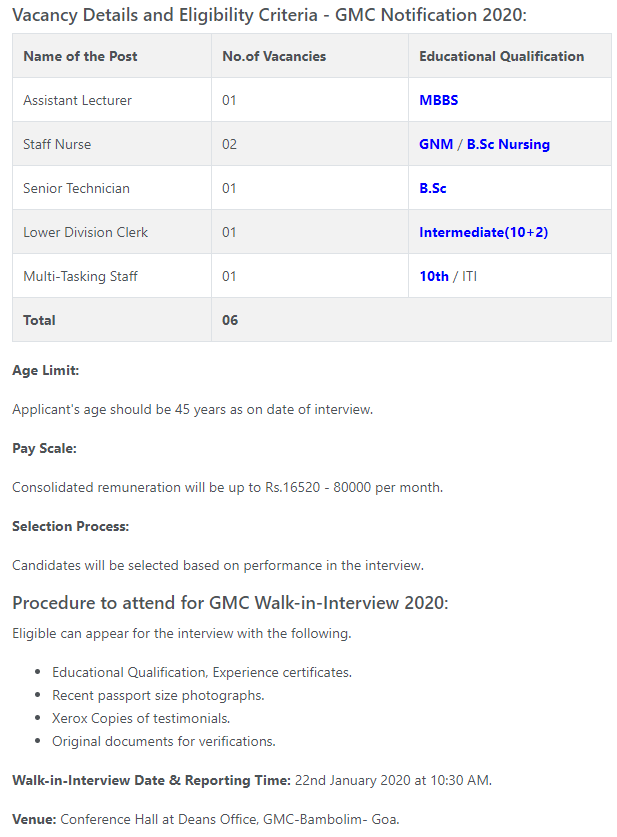
राष्ट्रीय परीक्षा एजेंसी (एन.टी.ए.) की स्थापना मानि संसाधन शिकास मंत्रालय, भारत सरकार द्वारा एक स्ितंत्र, स्िायत्त, स्िपोशित और आत्मशनभभर प्रमुख परीक्षा संगठन केरूप मेंकी गई ह।ैशैक्षणिक सत्र 2020-2021 मेंएमडी / एमएस / आयुर्वेद मेंपीजी णडप्लोमा, यनू ानी, णसद्धा और होम्योपैथी पाठ्यक्रमों मेंप्रर्वेश हेतुअणिल भारतीय आयुष स्नातकोत्तर प्रर्वेश परीक्षा -2020 केसंचालन का कायभ भारत सरकार द्वारा राष्ट्रीय परीक्षा एजेंसी (एन.टी.ए) को सौंपा गया है।





![[ IMP]How to Protect yourself from Coronovirus//कोरोनोवायरस से अपने आप को कैसे सुरक्षित रखें](https://1.bp.blogspot.com/-SDsztBMygQw/XrWWcyDpF-I/AAAAAAAARa0/eWTMyBE5exozVqCgCukqP1G7gUTrV4V0wCNcBGAsYHQ/s640/How%2Bto%2BProtect.jpg "[ IMP]How to Protect yourself from Coronovirus//कोरोनोवायरस से अपने आप को कैसे सुरक्षित रखें")




![[Imp]Tips for All Exams Crack [ एग्जाम को क्रैक करने का तरीका ]](https://www.missionnursing.in/wp-content/uploads/2020/05/ImpTips-for-All-Exams-Crack-एग्जाम-को-क्रैक-करने-का-तरीका-.webp "[Imp]Tips for All Exams Crack [ एग्जाम को क्रैक करने का तरीका ] 33")